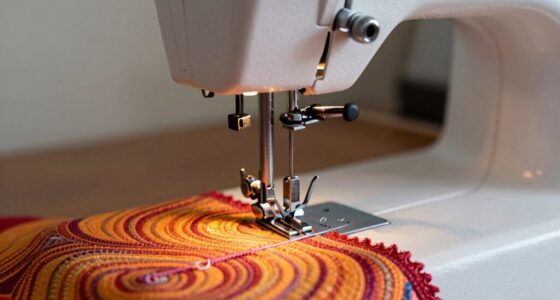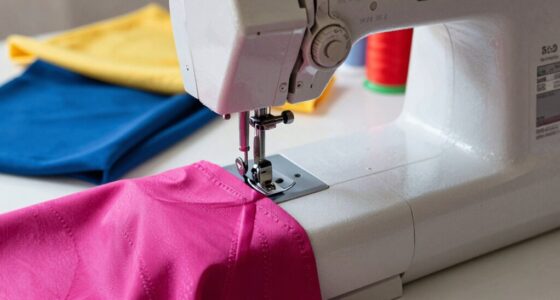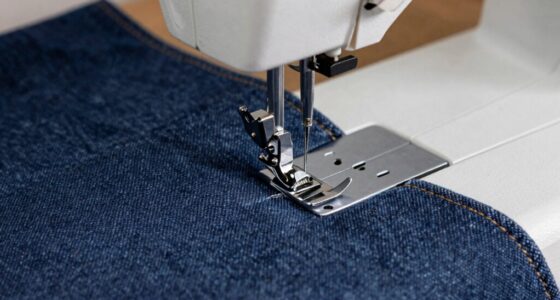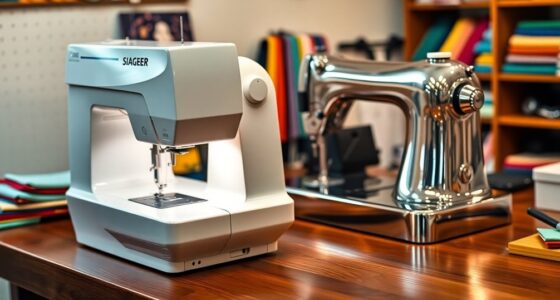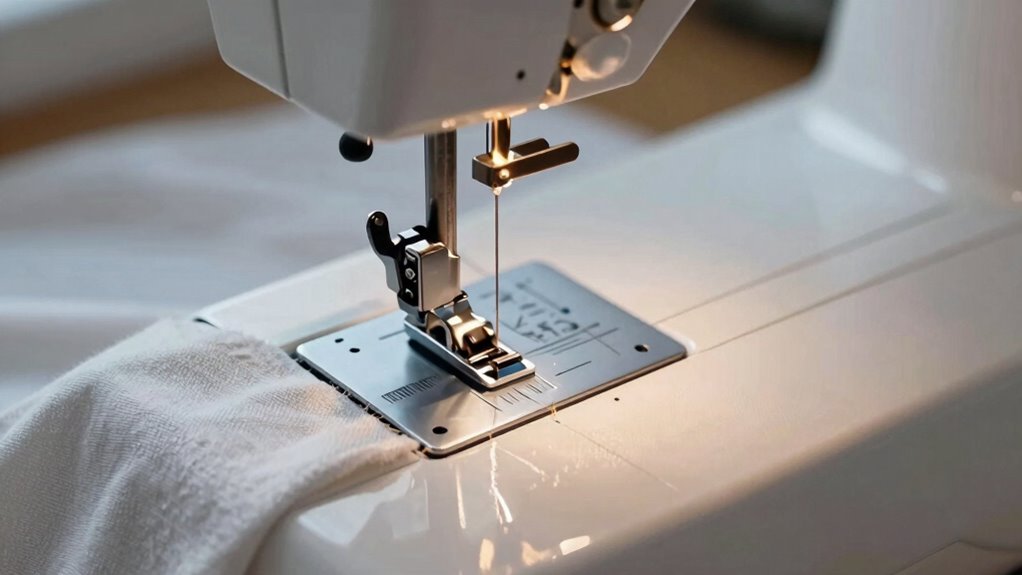
Straight-stitch plates help you sew more accurately by guiding your fabric along a straight path, ensuring even, precise stitches. They keep your fabric stable, preventing slipping or shifting during sewing, especially on tricky fabrics or detailed projects. Using one minimizes the need for constant adjustments, saving you time and frustration. With better control and improved stitch quality, your projects look more professional. Keep exploring to discover how these plates can make your sewing even easier and more consistent.

Get tools and workshop supplies delivered free — and shop member deals
- Fast, free delivery on millions of items
- Access to Prime Big Deal Days deals on October 6–7
- Prime Video, Amazon Music and more included
Key Takeaways
- Straight-stitch plates guide fabric for precise, straight stitches, improving accuracy in sewing projects.
- They help maintain fabric stability, reducing slipping or shifting during sewing.
- These plates facilitate even seam allowances and professional-looking stitches.
- They enable better control over delicate or intricate fabrics, preventing puckering or gathering.
- Using straight-stitch plates promotes consistent stitch quality and enhances overall sewing precision.
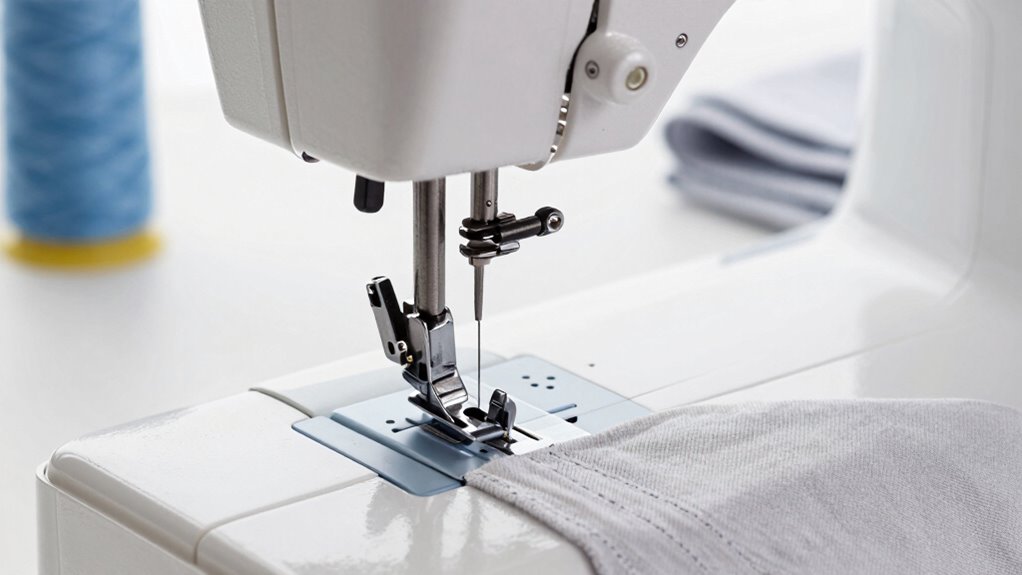
A straight-stitch plate is an indispensable accessory in sewing machines, designed specifically to guide your fabric for precise, straight stitches. When you switch to a straight-stitch plate, you immediately notice how much easier it is to control your fabric, especially when sewing straight seams or topstitching. This accessory helps maintain fabric stability, reducing the chances of slipping or shifting as you sew. With better guidance, your stitches stay even and consistent, which is essential for professional-looking results. It also minimizes the need for constant adjustments, saving you time and frustration during your sewing projects.
One of the key benefits of using a straight-stitch plate is how it influences thread tension. Since the plate helps keep the fabric flat and steady, it allows the machine’s tension settings to work more effectively. Proper thread tension is critical for balanced stitches; too tight, and your stitches might pucker or gather, too loose, and they could look loose or uneven. When your fabric sits securely on a straight-stitch plate, you’re less likely to encounter tension issues caused by fabric shifting or bunching. This results in cleaner, more professional stitches, especially on delicate or slippery fabrics, where maintaining fabric stability is a challenge. Additionally, consistent seam allowances are easier to maintain, which is crucial for achieving a polished finished product. Using a straight-stitch plate can also help develop sewing skills by encouraging more precise and mindful sewing practices.
A straight-stitch plate ensures fabric stays flat, enabling optimal thread tension for cleaner, professional stitches every time.
Another advantage of a straight-stitch plate is that it simplifies the sewing process for precision work. If you’re piecing small fabric pieces or sewing delicate materials, the plate’s narrow groove helps keep your fabric aligned perfectly. This is especially useful for projects like quilting, where accuracy is essential. By reducing fabric movement, you can focus on your stitch quality instead of fighting to keep everything in place. This stability also improves the overall appearance of your seams, making them straighter and more uniform. Additionally, accurate seam allowances are easier to follow when you’re working with detailed patterns or intricate designs. Incorporating a straight-stitch plate into your sewing routine can also help develop better sewing habits, such as precise seam allowances and consistent stitch placement. Overall, the use of a straight-stitch plate can significantly enhance sewing precision, making your projects look more polished and professional.
straight-stitch plate for sewing machine
As an affiliate, we earn on qualifying purchases.
As an affiliate, we earn on qualifying purchases.
Frequently Asked Questions
Can Straight-Stitch Plates Be Used With All Sewing Machine Brands?
Straight-stitch plates aren’t compatible with all sewing machine brands. You need to check fabric compatibility and machine compatibility before trying to use one. Some machines are designed specifically for straight-stitch plates, while others may require adapters or special fittings. Always consult your machine’s manual or manufacturer to verify the straight-stitch plate fits properly and works safely with your sewing machine. This prevents damage and ensures smooth sewing.
How Do Straight-Stitch Plates Affect Sewing Speed?
Did you know that using a straight-stitch plate can boost sewing speed by up to 20%? It allows you to sew more accurately and efficiently. With a straight-stitch plate, you’ll notice better thread tension control and improved sewing precision, especially on delicate fabrics. This setup minimizes fabric slippage and guides stitches perfectly, enabling you to sew faster without sacrificing quality or precision.
Are Straight-Stitch Plates Compatible With Decorative Stitches?
Straight-stitch plates are generally not compatible with decorative stitches because they limit the fabric’s movement and can cause skipped stitches or uneven embroidery. Decorative stitch limitations become evident when using a straight-stitch plate, as it’s designed mainly for straight stitches. If you want to do decorative sewing, you’ll need a plate that accommodates the specific stitch pattern, ensuring smooth fabric handling and better stitch quality.
Do Straight-Stitch Plates Require Special Maintenance?
Straight-stitch plates don’t require special maintenance beyond your regular cleaning. However, you should check your thread tension regularly to guarantee consistent stitches and adjust it if needed. Also, confirm that your needle is compatible with the plate; using the correct needle prevents damage. Keep the plate clean from lint and debris, and inspect it often to maintain smooth sewing. Proper care ensures your sewing remains precise and hassle-free.
Can I Switch Back to a Standard Plate Easily?
Switching back to a standard plate is as straightforward as flipping a switch. You just need to check the plate compatibility with your machine and follow the simple switching procedures, which usually involve removing the straight-stitch plate and installing the standard one. Most machines are designed for easy swaps, so you won’t need special tools or a sewing degree. Just take your time, and you’ll be back to your usual routine in no time.
Conclusion
Switching to a straight-stitch plate might seem like a small change, but it transforms your sewing experience. While it offers precision and cleaner seams, it also demands a steadier hand and more attention. Just as clarity sharpens your vision, this plate sharpens your stitches. Embrace the contrast—where simplicity meets control—and watch your projects reach a new level of perfection. In sewing, as in life, sometimes less is more, but only if you’re willing to focus.
Halloween Picks
halloween
As an affiliate, we earn on qualifying purchases.