
To build a storage system that grows with your stash, choose modular, reconfigurable units like stackable bins, adjustable shelves, or modular drawers. Assign specific modules to different categories and label everything clearly for quick access. Regularly update and reconfigure your setup as your collection expands, creating designated zones for easy organization. Using space-efficient designs helps maximize capacity without losing accessibility. Keep these tips in mind to maintain an adaptable, organized system—if you want to learn more, keep exploring the details.

Get business pricing on tools and workshop supplies
- Business-only prices and quantity discounts
- Tax-exempt purchasing
- Multiple users, one account, clear invoices
Key Takeaways
- Use modular, reconfigurable storage units to easily expand and adapt as your collection grows.
- Label containers clearly and incorporate color coding for quick identification and organization.
- Assign specific modules to different categories, creating designated zones for efficient retrieval.
- Plan space-efficient layouts that maximize capacity without sacrificing accessibility or flexibility.
- Regularly update and adjust the storage system to accommodate new items and changing needs.
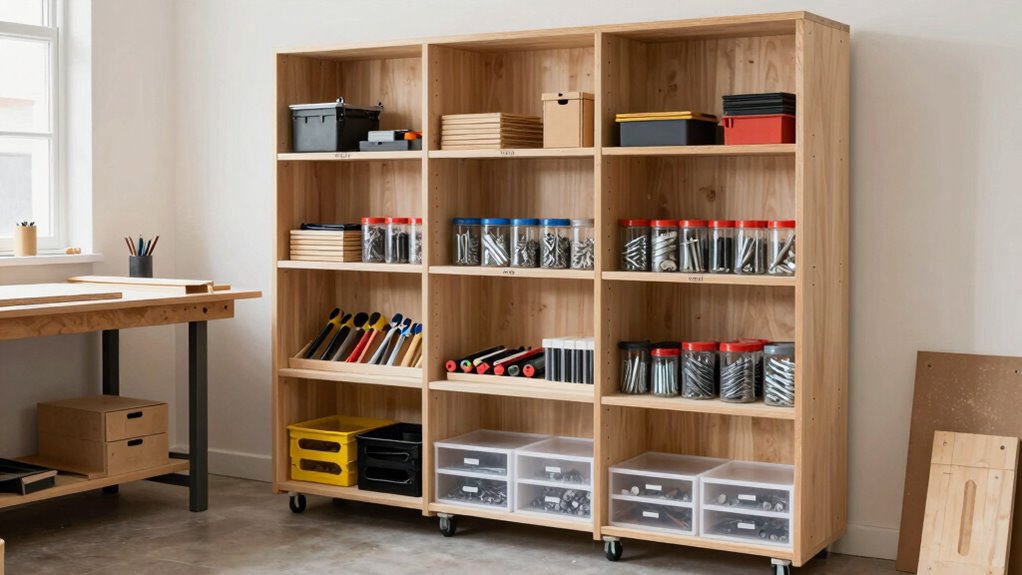
As your collection of items expands, it’s essential to have a storage system that adapts seamlessly. The key to this flexibility lies in embracing a modular design, which allows you to add, rearrange, or remove storage units without overhauling your entire setup. Modular storage systems are versatile, making it easier to accommodate new items as your stash grows. Think of it as building blocks—you can customize your storage based on your evolving needs, ensuring your space remains organized and functional. This approach prevents clutter from spiraling out of control and keeps everything accessible.
Flexible, modular storage keeps your space organized and adaptable as your collection grows.
Incorporating label organization into your system enhances its efficiency. When each container or section is clearly labeled, you instantly know where everything belongs, saving you time and frustration. Labels act as signposts, guiding you directly to the item you need without sifting through piles or guessing. Use durable labels that can withstand regular handling and consider color coding for different categories—this adds an extra layer of visual clarity. When combined with a modular design, label organization becomes a powerful tool for maintaining order, especially as your collection grows and your storage demands become more complex.
To implement this, start by choosing storage units that can be easily expanded or reconfigured, such as stackable bins, adjustable shelving, or modular drawers. Think about your collection’s categories—clothes, tools, collectibles, or supplies—and assign specific modules to each. Label each section or container accordingly, ensuring that labels are visible and easy to read. As new items come in, simply add new modules or adjust existing ones, then update your labels as needed. This way, your storage remains tidy and you won’t have to reorganize everything every time you acquire something new. Paying attention to your storage needs can help you select the most suitable options for your space and collection size.
Another benefit of a modular design combined with label organization is the ability to optimize space. You can tailor your storage to fit your available area, whether it’s a small closet or a large garage. The flexibility allows you to create zones for different categories, making retrieval intuitive. Plus, if your needs change over time, you can easily reconfigure your setup without starting from scratch. This adaptability is especially valuable when your collection is still growing—you want a system that scales with you, not against you. Space-efficient design is an important consideration to maximize storage capacity without sacrificing accessibility.
Additionally, utilizing a modular design that is customizable ensures that your storage system can evolve alongside your collection, preventing the need for frequent complete reorganizations. Incorporating space-saving features can further maximize your storage potential, ensuring that every inch of your space is used efficiently. In the end, building a storage system with a modular design and label organization ensures your space remains manageable and efficient, regardless of how much your collection expands. It’s about creating a dynamic, scalable solution that makes organization effortless and keeps your belongings accessible. As your stash grows, your storage system will grow with it, maintaining order and functionality every step of the way.
As an affiliate, we earn on qualifying purchases.
Frequently Asked Questions
What Are the Best Materials for Expandable Storage Systems?
You should choose durable, lightweight materials like metal or high-quality plastic for your expandable storage system. Modular shelving allows you to easily customize and expand your setup, while collapsible containers save space when not in use. Combining these materials guarantees flexibility, durability, and efficient use of space, making it simple to grow your storage without sacrificing organization or accessibility as your stash increases.
How Can I Organize Different Types of Items Efficiently?
Irony strikes—you think organizing different items is simple, but it’s a puzzle. You should use creative labeling to clearly identify each category, saving time and frustration. Incorporate modular design, so you can easily add or rearrange compartments as your collection grows. This way, your storage stays efficient, adaptable, and clutter-free. With a clever system, you’ll master organization and keep everything accessible, no matter how much you accumulate.
What Safety Considerations Should I Keep in Mind?
You should prioritize security protocols to protect your items from theft or damage, ensuring locks, alarms, or surveillance are in place. Use clear labeling techniques to identify contents easily, reducing the need to open multiple containers and minimizing risks. Keep hazardous or fragile items stored safely, away from children or pets. Regularly review and update your safety measures, maintaining a secure and organized storage system that adapts as your stash grows.
How Do I Prevent Pests in a Growing Stash?
Pests can sneak in like uninvited guests at a party, so you need to be proactive. Use pest-proof containers to keep your stash secure and prevent pests from getting in. Additionally, natural repellents like neem oil or lavender can deter insects without chemicals. Regularly check your storage, keep it clean, and guarantee proper ventilation. These steps help protect your stash as it grows, keeping pests at bay effectively.
What Maintenance Is Required for a Long-Lasting System?
To keep your storage system long-lasting, you need to maintain it regularly. Focus on cleaning routines to prevent dust, mold, or pests from building up, and guarantee your labels stay accurate to avoid confusion. Check for any signs of wear or damage, and replace worn-out components promptly. Consistent maintenance helps preserve your system’s integrity, making sure your stash remains organized, fresh, and easy to access as it continues to grow.
Conclusion
As your stash grows, your storage system should be unstoppable—like a fortress that can withstand a hurricane! Don’t settle for chaos or constant reorganizing; build a system that adapts effortlessly and keeps your treasures safe and accessible. Remember, a well-designed storage isn’t just about today’s needs but about future-proofing your chaos, so you can conquer even the biggest piles with ease. With the right setup, your stash becomes a playground, not a nightmare.
Fall yard work Picks
leaf blowers
As an affiliate, we earn on qualifying purchases.