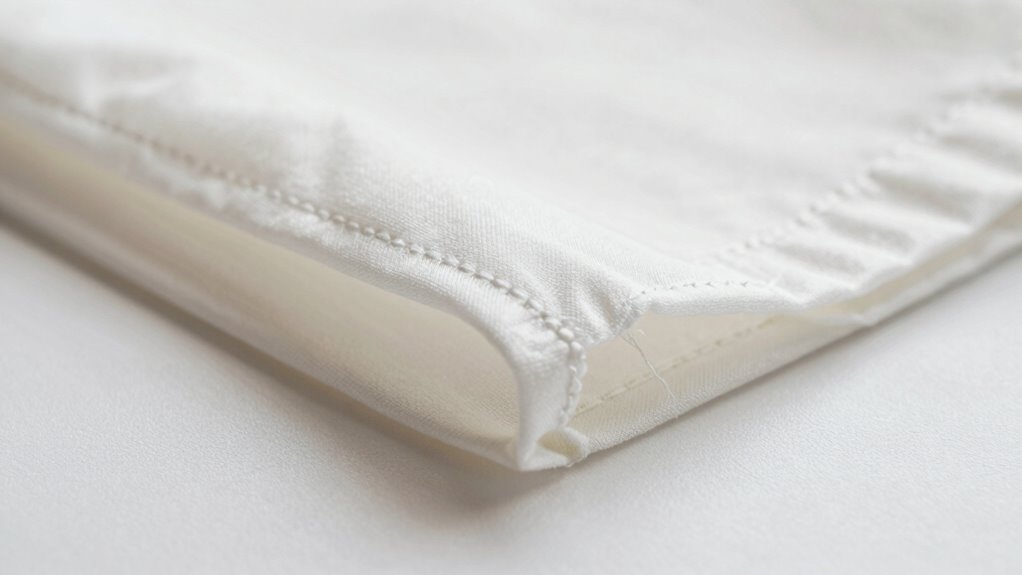

To sew an even narrow hem on lightweight fabric, start by thoroughly pressing and marking your desired hem length. Fold the raw edge once, then press for a crisp crease—double folding can be optional for lighter fabrics. Use a fine needle, a straight stitch with a shorter stitch length, and sew slowly. Stabilize the fabric with pins or lightweight interfacing to prevent puckers. With patience and proper technique, you’ll achieve a professional finish—keep going to discover more tips.

Get tools and workshop supplies delivered free — and shop member deals
- Fast, free delivery on millions of items
- Access to Prime Big Deal Days deals on October 6–7
- Prime Video, Amazon Music and more included
Key Takeaways
- Wash, press, and mark the desired hem length accurately before folding the fabric.
- Use a fine needle (size 70/10 or 60/8) and sew with a short, straight stitch (around 2.0 mm).
- Fold the raw edge once or twice, pressing to create a crisp, even hem line.
- Stabilize the hem with pins, clips, or lightweight fusible interfacing to prevent shifting.
- Sew slowly and evenly, then press the finished hem for a smooth, professional look.
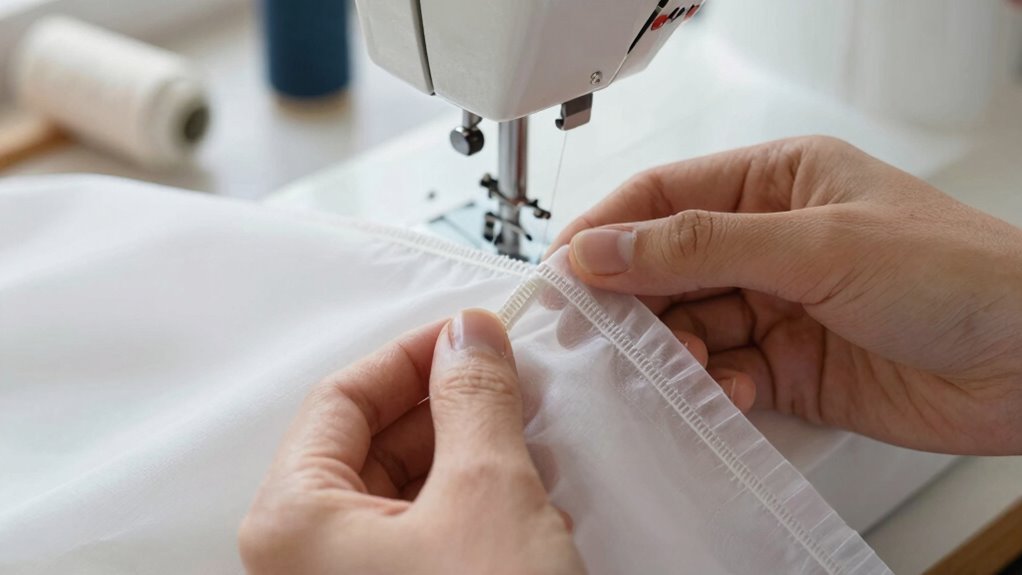
Have you ever struggled to create a neat, even hem on lightweight fabric? If so, you’re not alone. Lightweight fabrics like chiffon, silk, or voile can be tricky because they tend to slip, fray, or shift as you sew. To get a clean, professional-looking narrow hem, you need to master the right hemming techniques and focus on fabric stabilization. Proper preparation makes all the difference, so take your time to guarantee your fabric stays flat and steady throughout the process.
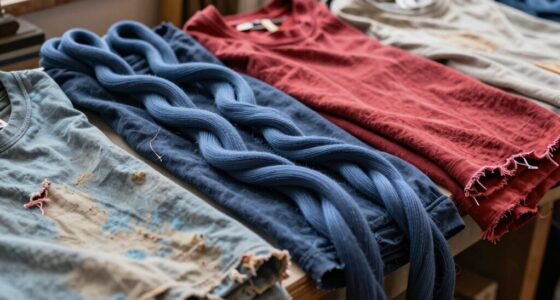
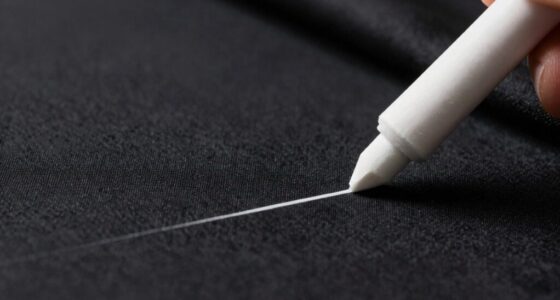
Start by washing and pressing your fabric thoroughly to remove any wrinkles and stabilize the fibers. Once it’s clean and smooth, use tailor’s chalk or a fabric marking pen to mark your desired hem length. For a narrow hem, a typical width is about 1/4 inch or even less. Fold the raw edge up once, then press it with an iron to create a crisp crease. Folding twice and pressing again can help hide raw edges and give your hem a neat finish, but with lightweight fabrics, a single fold is often enough to prevent fraying and keep your hem looking smooth.
Wash, press, and mark lightweight fabric for a smooth, neat narrow hem. Single fold often suffices.
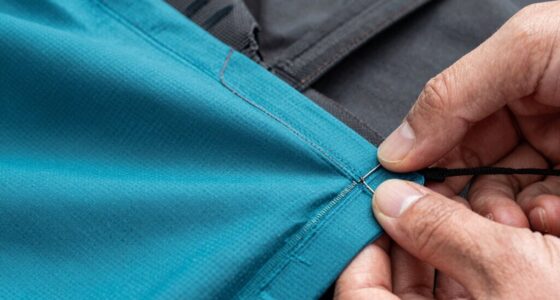
Hemming techniques are essential here. A popular method for lightweight fabric is to use a narrow rolled hem, which involves turning the edge over multiple times to create a tiny, clean finish. To do this easily, consider using a serger or a narrow hem foot attachment on your sewing machine. Before sewing, stabilize the fabric by pinning or clamping it carefully along the fold line. You can also use lightweight fusible interfacing or fabric stabilizers to reinforce the hem area. These stabilizers help prevent the fabric from shifting or puckering, making it easier to sew a consistent, even line. Fabric stabilization is key to achieving professional results on delicate textiles.
When sewing, go slow and use a fine needle suitable for lightweight fabrics—size 70/10 or 60/8 is typically best. Use a straight stitch with a slightly shorter stitch length, around 2.0 mm, to guarantee the hem is secure but not bulky. Keep your fabric flat and taut as you sew, guiding it gently without pulling. If your machine has a hemmer or rolled hem stitch, select it to achieve a narrow, nearly invisible finish.
Finally, press your hem again after sewing to set the stitches and smooth out any puckers. Carefully trim any uneven threads, and check your work for consistency. With patience, the right tools, and proper fabric stabilization, you’ll create a beautifully even narrow hem that complements your lightweight fabric project perfectly.
narrow hem foot attachment for sewing machine
As an affiliate, we earn on qualifying purchases.
As an affiliate, we earn on qualifying purchases.
Frequently Asked Questions
What Types of Lightweight Fabrics Are Best for Narrow Hems?
You should choose lightweight fabrics with good fabric stability, like silk charmeuse, georgette, or crepe. These fabrics hold their shape well, ensuring a clean, even narrow hem. Avoid fabrics that are too delicate or flimsy, as they can fray easily or lose shape, making it hard to maintain a consistent hem width. Opt for fabrics that provide enough stability to sew a precise, narrow hem without puckering or stretching.
How Do I Prevent Puckering When Hemming Lightweight Fabric?
To prevent puckering, you need to control stitch tension and hem length. Keep your stitch tension slightly looser, like a gentle breeze, allowing the fabric to breathe. Adjust the hem length to match the fabric’s weight, ensuring it doesn’t pull tight. Pin carefully, smoothing fabric as you sew, and use a fine needle for delicate lightweight fabrics. These steps keep your hem even, smooth, and free from puckers.
Can I Sew a Narrow Hem on Stretchy Lightweight Fabrics?
Yes, you can sew a narrow hem on stretchy lightweight fabrics. Use stretch fabric techniques like a narrow zigzag stitch or a serger to maintain elasticity. Seam finishing tips include stabilizing the edge with stay tape or clear elastic to prevent puckering and puckering. Always test your stitches on scrap fabric first, and use a stretch needle to avoid skipped stitches, ensuring a smooth, professional finish.
What Sewing Machine Settings Are Ideal for Narrow Hems?
Did you know that using the right sewing machine settings can improve your hem’s precision by up to 30%? For narrow hems on lightweight fabric, set your machine to a straight stitch or a narrow zigzag, and activate fabric stabilization to prevent puckering. Choose a fine, polyester or silk thread for smooth, even stitches. Adjust tension slightly higher if needed, and test on scrap fabric before sewing your actual hem.
How Do I Finish the Raw Edge of a Narrow Hem?
To finish the raw edge of a narrow hem, you can use hemming techniques like a rolled hem or a zigzag stitch, which helps prevent fraying. Alternatively, you might trim the excess fabric and apply a narrow bias tape or use a serger for edge finishing. These methods guarantee your hem looks neat and professional while protecting the fabric’s edges from fraying over time.
Conclusion
Now that you know how to create a smooth, even narrow hem on lightweight fabric, you’ll feel confident tackling delicate projects with ease. Remember, patience and careful measurement are your best friends here. With practice, you’ll find hemming becomes quicker and more precise. So why settle for uneven edges when you can master this skill and give your garments a polished finish? Are you ready to elevate your sewing game and impress everyone with your flawless hems?
Fall yard work Picks
leaf blowers
As an affiliate, we earn on qualifying purchases.