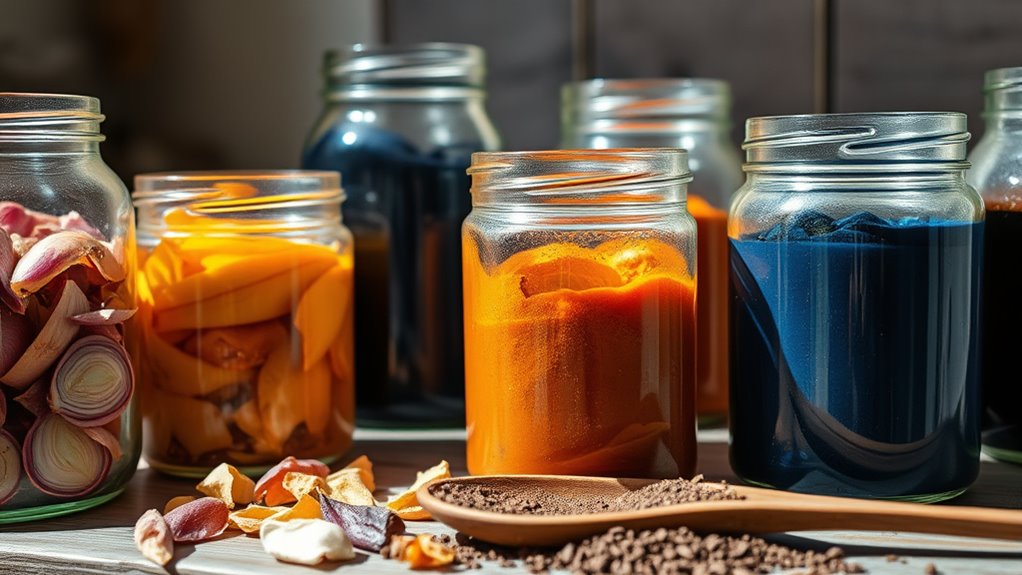

Using kitchen scraps for natural dyes can be safe and produce vibrant, long-lasting colors when you understand the chemistry involved. Proper extraction, the use of eco-friendly mordants, and understanding how compounds bond with fibers help guarantee your results are durable and safe. Avoid contamination by thoroughly preparing scraps, and choose non-toxic mordants like alum or vinegar. To achieve results that last and stay safe, it’s helpful to learn more about how dye chemistry and fixation work.
Key Takeaways
- Using kitchen scraps like onion skins and beet peels provides safe, non-toxic natural dyes when properly extracted and prepared.
- Mordants such as alum or vinegar help fix dyes securely to fabrics, improving colorfastness and durability.
- Understanding dye chemistry ensures effective extraction and reduces risks of fabric damage or unsafe chemical reactions.
- Proper pre-treatment and mordanting techniques enhance safety and prevent contamination or fading over time.
- Selecting eco-friendly mordants and following best practices promote safe, long-lasting natural dye results from kitchen scraps.
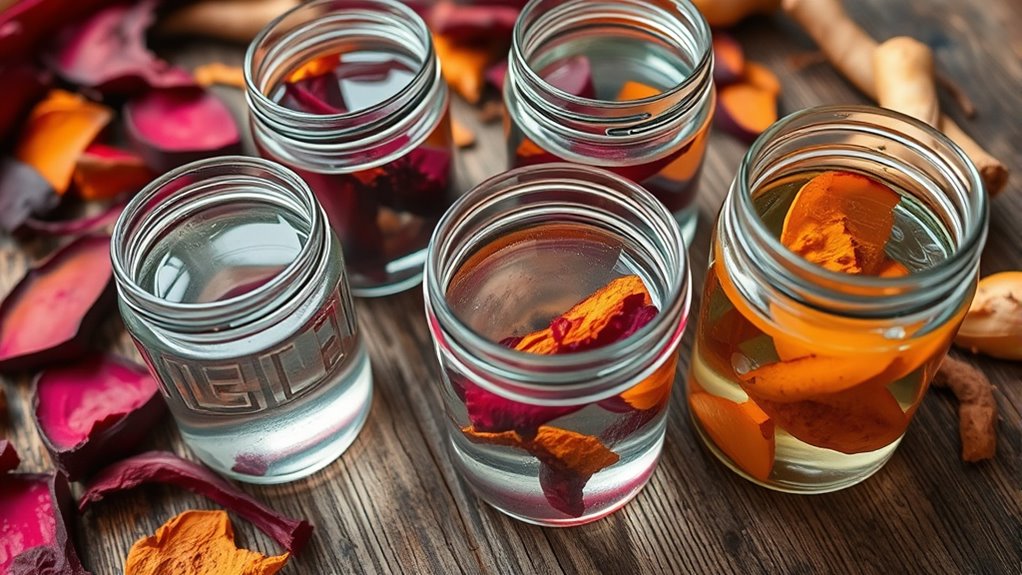
You can transform everyday kitchen scraps into vibrant, eco-friendly dyes that breathe new life into your fabrics and crafts. The process involves understanding the chemical reactions behind natural dyeing and mastering dye extraction techniques. When you use kitchen scraps like onion skins, beet peels, or avocado pits, you’re tapping into natural compounds that react with fibers in a way that produces color. These chemical reactions are essential because they determine how well the dye bonds with your fabric, impacting both safety and colorfastness. For instance, mordants—substances like alum or vinegar—are often used to promote better dye fixation by creating chemical bonds with the dye molecules, resulting in more vibrant and durable colors. Knowing how these reactions work helps you achieve consistent results and guarantees your dyeing process is safe and effective. Understanding dye chemistry is crucial for optimizing colorfastness and ensuring safe results.
As an affiliate, we earn on qualifying purchases.
Frequently Asked Questions
Can Natural Dyes Cause Allergic Reactions?
You might wonder if natural dyes from kitchen scraps can cause allergic reactions. While generally safer than synthetic dyes, allergy risks exist, especially if you have skin sensitivity or allergies to specific plants or foods. Always do a patch test before full use to check for reactions. If you notice irritation or discomfort, discontinue use immediately. Being cautious helps protect you from potential allergic responses linked to natural dyes.
How Long Do Natural Dyes Last on Fabrics?
Think of your dyed fabric as a garden in full bloom; with proper care, its colors can stay vibrant for years. Natural dyes generally last between 2 to 5 years, depending on factors like fabric type, exposure to sunlight, and washing habits. To improve dye longevity and prevent fabric fading, wash with gentle detergents, avoid direct sunlight, and consider using a mordant. Follow these tips to keep your colorful creation lively.
Are Natural Dyes Suitable for All Fabric Types?
You might wonder if natural dyes suit all fabric types. While many fabrics like cotton, linen, and silk work well, some require specific dye application techniques for best results. Fabric compatibility varies, so it’s essential to test small samples first. Using proper mordants can enhance dye absorption and colorfastness. Keep in mind, natural dyes may not be as vibrant or long-lasting on all fabrics, but with the right methods, you can achieve beautiful, eco-friendly results.
Is There a Way to Improve Dye Color Intensity?
To improve dye color intensity, you should focus on increasing dye concentration, which allows for richer colors. Using a mordant can also enhance the vibrancy and fix the dye better to the fabric. Experiment with different mordants like alum or iron to see how they affect color depth. Additionally, longer dyeing times and pre-soaking your fabric can help achieve more vivid, lasting hues.
How Should Leftover Dye Solutions Be Disposed of Safely?
You should handle dye disposal carefully to guarantee safe waste management. First, check if the leftover dye is biodegradable; if so, dilute it with plenty of water and pour it onto soil or compost. If not, avoid pouring it down the drain to prevent environmental harm. Always follow local regulations for waste disposal, and consider taking unused dye solutions to a hazardous waste facility for proper dye disposal.
Conclusion
By exploring kitchen scraps like onion skins and beet peels, you can create vibrant, safe, and colorfast dyes at home. For example, imagine dyeing a cotton scarf with turmeric leftover from your cooking—its rich hue remains vibrant after multiple washes. Embracing these natural dyes not only reduces waste but also adds a personal, eco-friendly touch to your projects. So go ahead, experiment confidently, knowing your creations are both beautiful and safe.