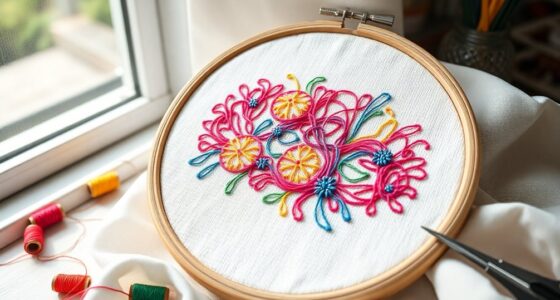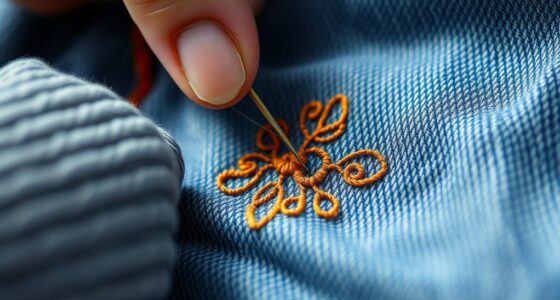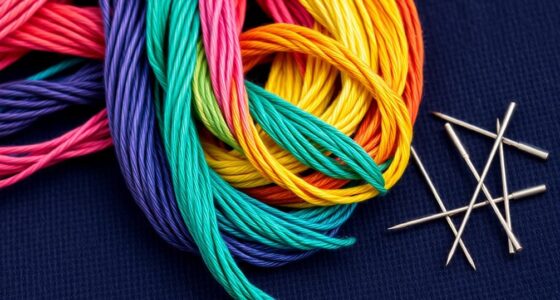

Sashiko is a traditional Japanese embroidery technique used for visible mending and decorative stitching. To get started, choose sturdy, tightly woven fabrics like indigo-dyed cotton or linen that support dense, even stitches. Focus on creating consistent, small running stitches that form geometric patterns such as waves or hexagons. Use natural-colored cotton thread for authenticity, but don’t hesitate to experiment with colors. Mastering these basics will open up many creative and cultural possibilities—there’s always more to discover as you continue.
Key Takeaways
- Choose sturdy, tightly woven fabrics like indigo cotton or linen for durable sashiko repairs.
- Use traditional geometric patterns such as waves or hexagons to create visually appealing designs.
- Maintain consistent tension and stitch length for uniform, characteristic running stitches.
- Select natural-colored cotton thread for authenticity; experiment with colors as skills improve.
- Understand sashiko’s cultural significance, blending functionality with aesthetic beauty in visible mending.

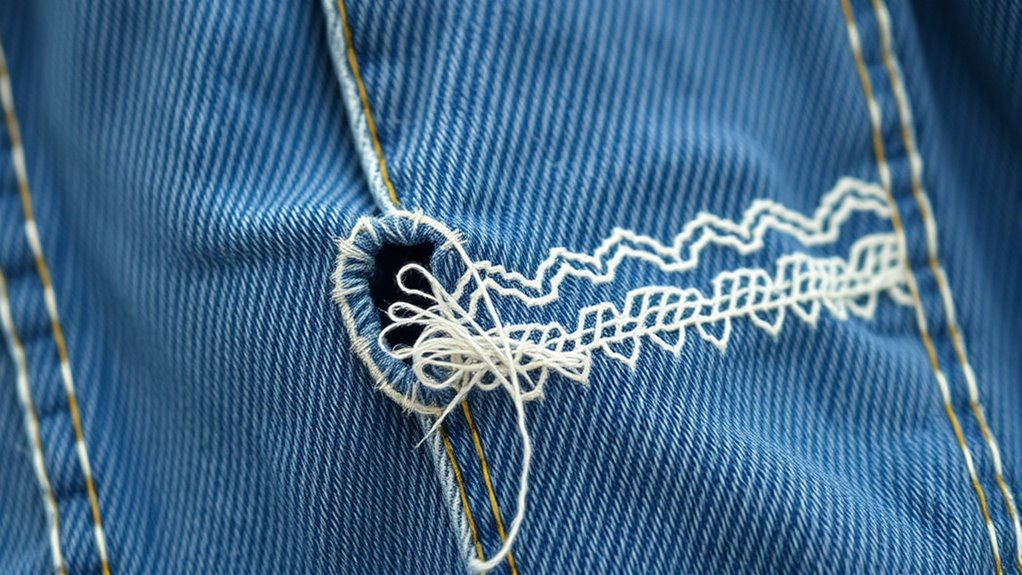
If you’re interested in traditional Japanese embroidery, sashiko is a perfect starting point. This beautiful art form combines simplicity with functionality, allowing you to mend and decorate textiles simultaneously. When beginning sashiko, your fabric selection is vital. Typically, you’ll want to choose a sturdy, tightly woven fabric like indigo-dyed cotton or linen. These materials provide the ideal base for the dense, even stitches characteristic of sashiko. Their durability ensures your embroidered repairs will hold up over time, making sashiko not just decorative but also practical. Once you’ve picked your fabric, you can explore traditional patterns that have been passed down through generations. Classic sashiko designs include geometric motifs like waves, hexagons, and repetitive lines, each carrying its own symbolism and history. These patterns are easy to learn and create a rhythmic stitching process that’s both meditative and satisfying. Using traditional patterns helps connect you to the cultural roots of sashiko, enriching your understanding of the craft. When you start stitching, focus on maintaining consistent tension and stitch length. This consistency is vital to achieving the characteristic uniformity of sashiko embroidery. The stitches are typically small, running stitches that layer over each other to form the pattern. As you work, pay attention to the fabric and pattern placement, aligning your stitches carefully to keep the design balanced. If you’re repairing fabric, cut a patch that matches the fabric’s weight and weave to guarantee the repair blends seamlessly with the original material. When choosing thread, opt for white or natural-colored cotton thread for a traditional look, but don’t hesitate to experiment with colored threads once you’re comfortable. Practice makes perfect, so start with small projects like mending a tear or embellishing a piece of clothing. Remember that sashiko isn’t just about perfect stitches; it’s about creating something functional and beautiful. Over time, you’ll develop your own style and possibly incorporate modern patterns or colors, but understanding traditional fabric choices and patterns forms a solid foundation. Sashiko invites you to appreciate the harmony between form and function, tradition and innovation. Additionally, understanding the fabric selection plays a crucial role in achieving durable and aesthetically pleasing results. With patience and attention to detail, you’ll soon find yourself creating intricate, meaningful embroidery that transforms everyday textiles into art. Whether you’re repairing worn-out garments or designing decorative pieces, the principles of fabric selection and traditional patterns will guide you in mastering sashiko’s timeless elegance.
Frequently Asked Questions
Can Sashiko Be Done on Synthetic Fabrics?
Yes, you can do sashiko on synthetic fabrics, but keep in mind fabric durability and dye compatibility. Synthetic materials may be less resistant to the needle’s piercing, so you should test a small area first. Additionally, some dyes may not hold well or could bleed during washing. To guarantee your sashiko lasts, choose sturdy synthetic fabrics and use compatible dyes, and always test before starting your project.
What Are the Best Tools for Beginners?
As a beginner, the best tools include sharp needles designed for sashiko, usually with a longer eye for thicker thread. Use high-quality sashiko thread and pre-wash your fabric to guarantee proper fabric preparation. Focus on maintaining a consistent stitch length; this will make your mending neat and durable. Start with a sashiko hoop or frame to help keep your fabric taut and make stitching easier.
How Do I Choose the Right Thread Color?
To choose the right thread color, consider your thread color coordination with the fabric. Decide if you want contrasting stitches to highlight your mending or matching thread for a subtle look. Contrasting threads create bold, decorative effects, while matching ones blend seamlessly. Think about the visual impact you desire, and select a color that complements or accentuates your fabric, making your sashiko embroidery both functional and beautiful.
Is Sashiko Suitable for All Clothing Types?
Did you know that sashiko originated as a practical technique for reinforcing fabric durability? It’s versatile and suits many clothing types, but it’s especially ideal for sturdy fabrics like denim and canvas. While it adds a distinctive style, sashiko might not be perfect for delicate or lightweight fabrics, as they can’t handle the stitching’s tension. So, consider your fabric’s durability and style compatibility before applying sashiko to your garments.
How Do I Repair Larger Holes With Sashiko?
To repair larger holes with sashiko, you should use reinforcement techniques like layered stitching to strengthen the fabric. Start by outlining the hole with a decorative pattern that not only covers the damage but also adds visual interest. Then, stitch multiple passes of sashiko to reinforce the area, ensuring durability. This approach blends functionality with aesthetic appeal, making your mend both sturdy and beautiful.
Conclusion
Now that you’ve learned the basics of sashiko, you’re ready to turn your mending into a beautiful art form. Think of sashiko as a thread that weaves stories into your clothes, transforming repairs into intricate designs. With each stitch, you’re not just fixing fabric—you’re creating a piece of wearable history. So, pick up your needle and let your creativity flow; soon, your mended garments will tell stories as rich as the stitches you sew.