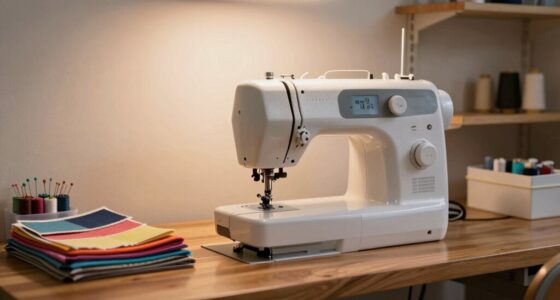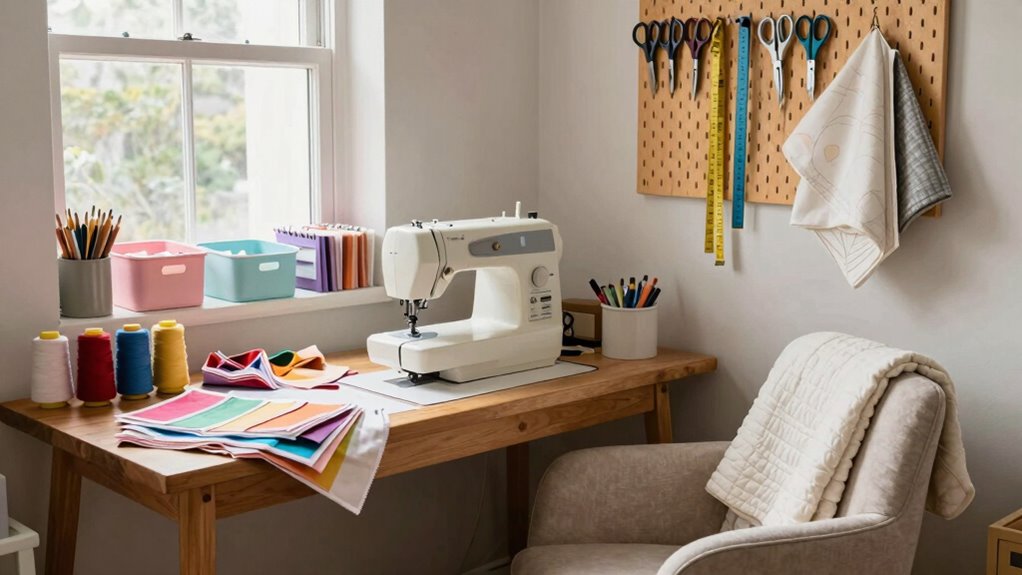

To create a sewing space in a shared room, find a corner or nook that you can organize with stackable bins, wall shelves, or pegboards for tools and fabrics. Use natural light and add adjustable lamps for better visibility. Choose ergonomic furniture and portable carts to maximize space and comfort. Communicate your plans clearly with roommates and set boundaries to keep your area tidy and cozy. Keep exploring for more tips on making your sewing spot functional and inviting.

Get business pricing on tools and workshop supplies
- Business-only prices and quantity discounts
- Tax-exempt purchasing
- Multiple users, one account, clear invoices
Key Takeaways
- Designate a specific corner or nook for your sewing area to minimize disruption.
- Use vertical storage like shelves and pegboards to maximize limited space efficiently.
- Communicate your sewing plans and boundaries clearly with your roommate.
- Incorporate portable furniture and organizers to keep supplies tidy and easily accessible.
- Ensure good lighting and ergonomic setup for comfort during extended sewing sessions.
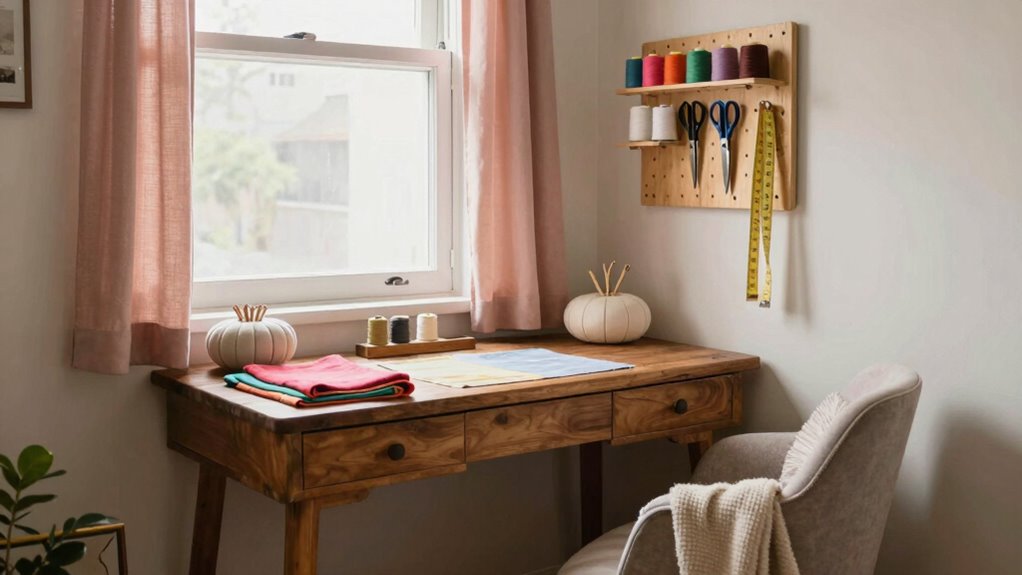
Have you ever struggled to find a dedicated spot for your sewing projects? If you’re sharing a room, carving out that space can seem tricky, but with a few strategic choices, you can create a functional sewing area without infringing on your roommate’s space. Start by evaluating the room’s layout to identify a corner or nook where your sewing setup won’t interfere with everyday activities. Once you’ve pinpointed a spot, focus on organizing your fabric storage. Use clear, stackable bins or fabric drawers so you can easily see your materials. Wall-mounted shelves or pegboards can hold tools, scissors, and patterns, keeping your workspace tidy and accessible. This approach not only maximizes limited space but also prevents clutter from spilling into shared areas.
Create a shared sewing space with smart storage, strategic placement, and clear boundaries for a clutter-free, inspiring environment.
Lighting solutions are equally important in a shared room because good lighting enhances your sewing experience and reduces eye strain. If you’re working during the day, position your workspace near a window to take advantage of natural light. For evening sewing sessions, invest in adjustable, bright LED lamps or clip-on lights that you can direct precisely where you need illumination. Magnetic or clip-on task lights are excellent for small spaces because they don’t take up valuable surface area. Additionally, consider using light-colored or reflective surfaces around your workspace to bounce light and brighten the area further. Understanding caffeine science can also help you plan your sewing sessions during times when you need an energy boost, making your workspace more productive. Incorporating ergonomic tools can further improve comfort and efficiency during long sewing sessions. To keep your workspace comfortable, consider adding a small adjustable chair or cushioned stool that supports proper posture during extended sewing periods.
To further optimize your sewing setup, think about incorporating multi-functional furniture that can serve multiple purposes and save space. When setting up your sewing space, be mindful of shared furniture and surfaces. If possible, designate a small section of a desk or table solely for your sewing projects to keep your materials organized and prevent accidental disruption. Portable sewing carts can be a smart investment; they allow you to store your machine, tools, and fabrics in one mobile unit, which you can tuck away or move as needed. Keep your supplies contained in labeled containers or fabric organizers to streamline your workflow and avoid chaos when you’re not sewing. Remember to regularly review and reassess your setup to improve functionality and comfort as your needs evolve. Creating a designated and organized sewing area not only enhances your productivity but also encourages consistent sewing habits.
Communication with your roommate is crucial. Let them know your plans for the sewing space and agree on boundaries to ensure everyone feels comfortable. By being considerate and organized, you can create a sewing nook that works within a shared environment. With thoughtful fabric storage, effective lighting solutions, and clear boundaries, you’ll find it easier to pursue your sewing passion without feeling overwhelmed or encroaching on shared space. In the end, your dedicated sewing corner will become a cozy, inspiring spot you look forward to returning to, even in a communal room.
Popular right now

LG 85-inch QNED75B Mini LED Smart TV Bundle with HDMI and CPS Protection Plan

eufy E25 Robot Vacuum and Mop Combo with HydroJet Roller Mop

Ninja Foodi DZ201 8-Quart DualZone 6-in-1 Air Fryer
As an affiliate, we earn on qualifying purchases.
Frequently Asked Questions
How Can I Soundproof My Sewing Area?
To soundproof your sewing area, start with noise reduction materials like foam panels or acoustic curtains to absorb sound. Use weatherstripping or door sweeps on doors and windows to block noise leaks. Adding thick rugs or mats can dampen vibrations and noise. You might also consider building a partial wall or using bookshelves filled with fabric or storage to create a barrier, further reducing sound transfer to shared spaces.
What Are Space-Saving Storage Solutions for Small Rooms?
Looking for space-saving storage solutions? Have you considered using wall-mounted shelves to keep your supplies organized without taking up floor space? Multi-functional furniture, like a sewing table with built-in storage, can maximize your room’s utility. These options help you maintain a clutter-free sewing area, making small rooms feel more open and functional. Isn’t it time you optimized your space for both creativity and convenience?
How Do I Establish Boundaries With Roommates?
You should prioritize open roommate communication to establish boundaries effectively. Clearly express your needs and listen to theirs, ensuring everyone feels respected. Set specific boundaries for your sewing space, like designated times or sections, and stick to them. Regular check-ins help maintain understanding and prevent conflicts. By actively practicing boundary setting and maintaining honest communication, you create a comfortable environment where your sewing space is respected without disrupting your shared living situation.
What Safety Measures Should I Consider in Shared Spaces?
You should prioritize shared space etiquette by clearly communicating boundaries and respecting each other’s privacy strategies. Keep your sewing supplies organized to avoid clutter and potential accidents. Use designated areas or storage bins to prevent hazards. Always turn off equipment when not in use and be mindful of noise levels. Regularly check in with your roommates to guarantee safety measures are maintained, fostering a respectful and secure sewing environment for everyone.
How Can I Customize Lighting for Sewing Tasks?
You might worry about harsh lighting ruining your sewing projects, but customizing your lighting can make a huge difference. Adjust the light intensity to suit your needs, ensuring bright enough for detailed work without eye strain. Choose task-specific fixtures like adjustable desk lamps or focused LED lights that provide proper illumination exactly where you need it. This way, you create an ideal sewing environment tailored to your comfort and precision.
Conclusion
Now that you’ve set up your sewing space in a shared room, imagine the projects waiting just around the corner—your next masterpiece, maybe, or a gift that’s truly personal. With your new setup, you’re ready to create whenever inspiration strikes. But here’s the question: what’s the first thing you’ll sew in your new space? The possibilities are endless, and your sewing adventure is just beginning. Are you ready to see where it takes you?