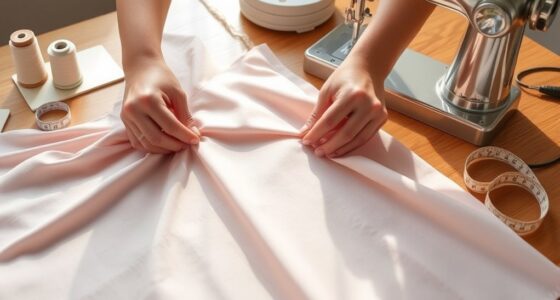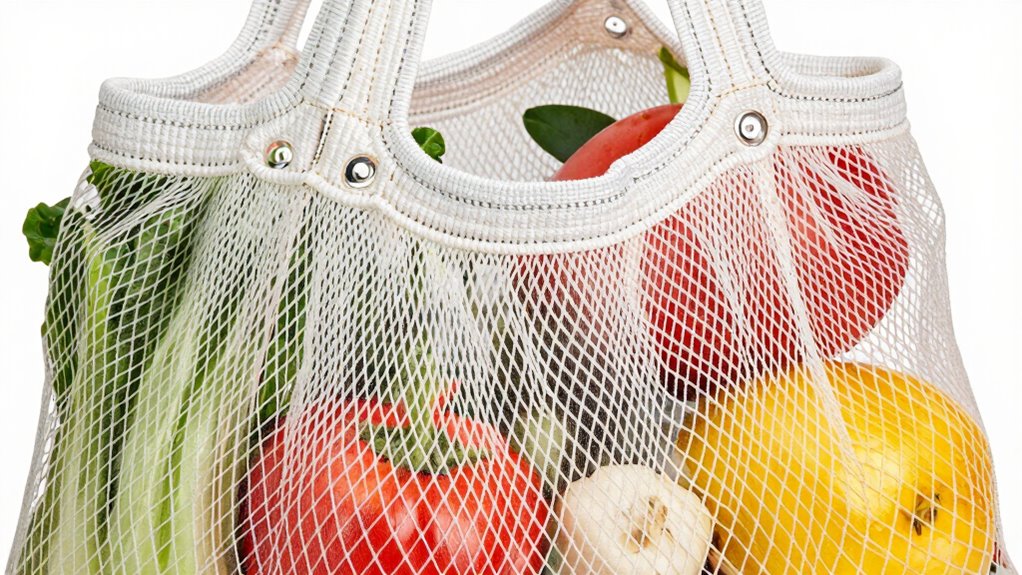
To make reusable produce bags that don’t rip, reinforce your seams with a strong, step-by-step method. Start by choosing durable fabrics like ripstop nylon or heavy-duty mesh and use thick, nylon or polyester thread. Sew multiple rows of zigzag or reinforced stitches along all seams. Finish edges with a zigzag stitch or serger to prevent fraying. By following these steps, your bags will withstand frequent use. Keep going to discover detailed instructions that guarantee your bags last longer.
Key Takeaways
- Use heavy-duty fabrics like ripstop nylon or canvas with tight weaves for enhanced durability.
- Reinforce seams with multiple rows of wide zigzag or reinforced straight stitches.
- Select strong, flexible threads such as polyester or nylon to prevent ripping under load.
- Finish edges with serger or zigzag stitches to avoid fraying and strengthen seams.
- Regularly inspect and gently wash bags to maintain seam integrity and prolong lifespan.
Why Do Produce Bags Rip and How Reinforced Seams Help
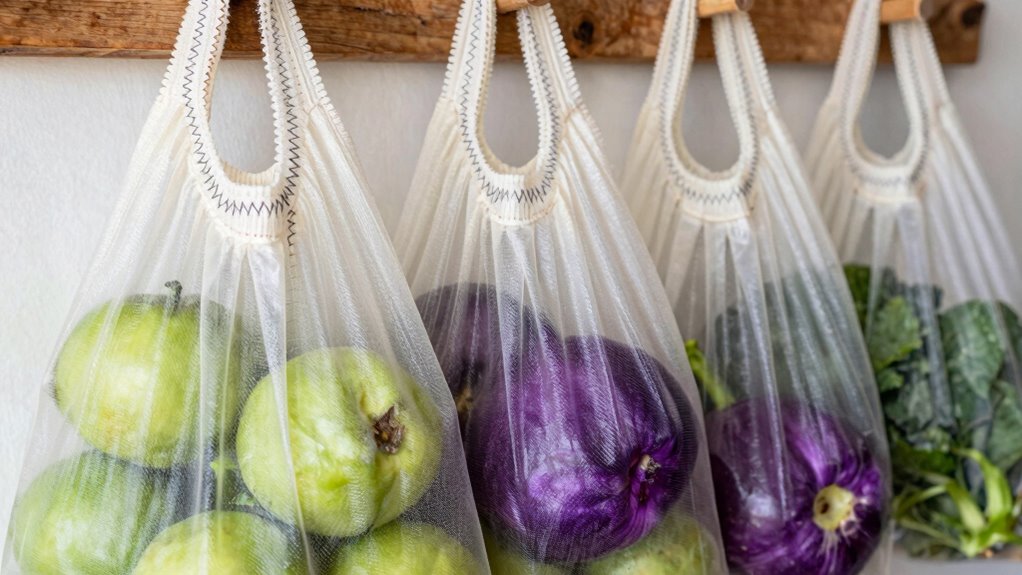
Have you ever wondered why reusable produce bags rip? It often comes down to fabric elasticity and seam tension. When you load your bag with fruits or vegetables, the fabric stretches. If the fabric isn’t flexible enough or becomes overstretched, it can weaken and tear. Similarly, seam tension plays a vital role. If seams aren’t sewn with proper tension, they can become loose or break under stress. Over time, repeated stretching causes tiny rips, especially at weak points. Reinforced seams help counteract this by distributing tension evenly across the bag. This prevents stress from concentrating at one spot, reducing the risk of ripping. Properly designed seams and fabrics with good elasticity are key to making your produce bags last longer. Understanding fabric elasticity is crucial for choosing or designing bags that withstand frequent use. Additionally, selecting fabrics with the right fabric elasticity properties can significantly improve durability and longevity. Incorporating reinforced seam techniques can further enhance the overall strength and resilience of your produce bags. Using quality stitching methods ensures your seams remain strong even after many washes and stretches.
Choosing Durable Fabrics and Thread for Reinforced Bags
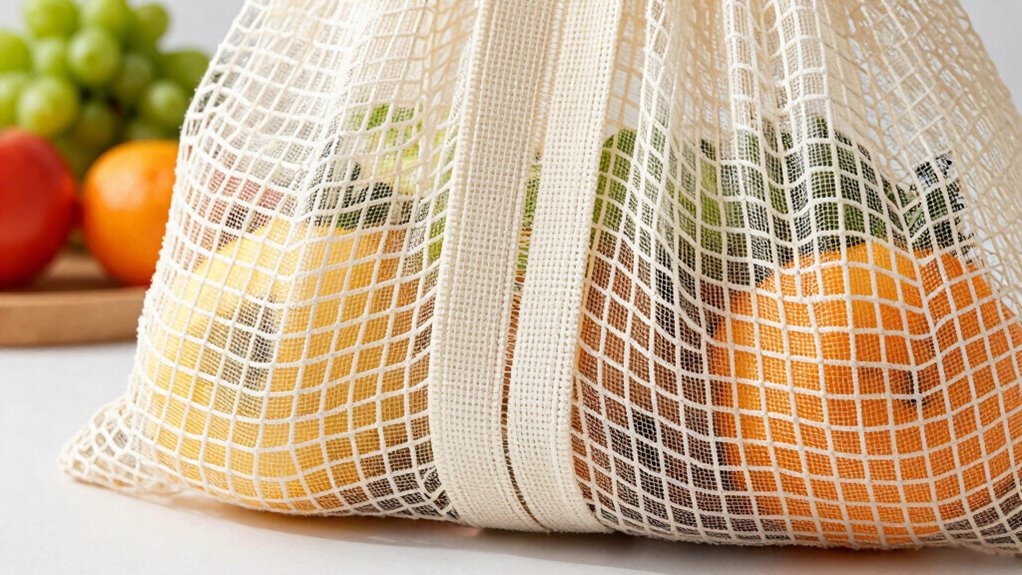
Choosing the right fabrics and thread is key to making your produce bags last longer and withstand regular use. When selecting fabric, opt for sturdy materials like ripstop nylon, canvas, or heavy-duty mesh, which resist tearing and wear. For thread durability, choose polyester or nylon threads, known for strength and flexibility. To help you decide, here’s a quick comparison:
| Fabric Type | Best Use |
|---|---|
| Ripstop Nylon | Light to medium loads |
| Heavy-duty Mesh | Breathable, strong bags |
| Canvas | Heavy loads, durability |
| Polyester Fabric | Versatile, tear-resistant |
| Cotton (heavy) | Reusable, eco-friendly |
Matching fabric selection with durable thread ensures your reinforced bags stay intact longer, even with frequent use. Additionally, understanding fabric construction can help you choose materials that hold up better over time. Selecting fabrics with tight weave improves the overall strength and longevity of your produce bags, especially for heavier loads.
How to Sew Reinforced, Rip-Resistant Produce Bags
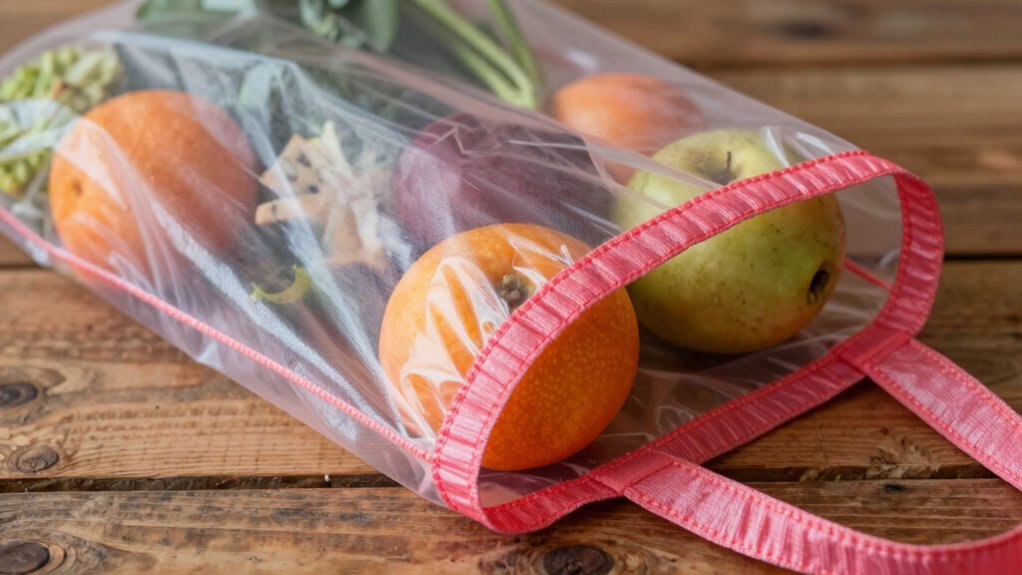
To create reinforced, rip-resistant produce bags, start by selecting sturdy fabrics like ripstop nylon or heavy-duty mesh, which provide a strong foundation. Next, consider fabric blending to enhance durability, combining layers for extra strength. When sewing, adjust your sewing machine settings to a heavy-duty stitch, such as a wide zigzag or reinforced straight stitch, ensuring seams are secure. Here’s what to do: 1. Use a thicker needle suitable for dense fabrics to prevent skipped stitches. 2. Sew multiple rows along the seams for added reinforcement. 3. Finish edges with a serger or zigzag stitch to prevent fraying and improve rip resistance. Additionally, understanding safe installation practices can help ensure your bags are both durable and secure for repeated use. Incorporating proper seam techniques can further enhance the overall strength and longevity of your produce bags, making them more reliable for everyday use. Paying attention to fabric care can also extend the life of your reinforced bags, ensuring they stay sturdy through many cycles of use and washing.
Top Mistakes When Reinforcing Produce Bags and How to Avoid Them
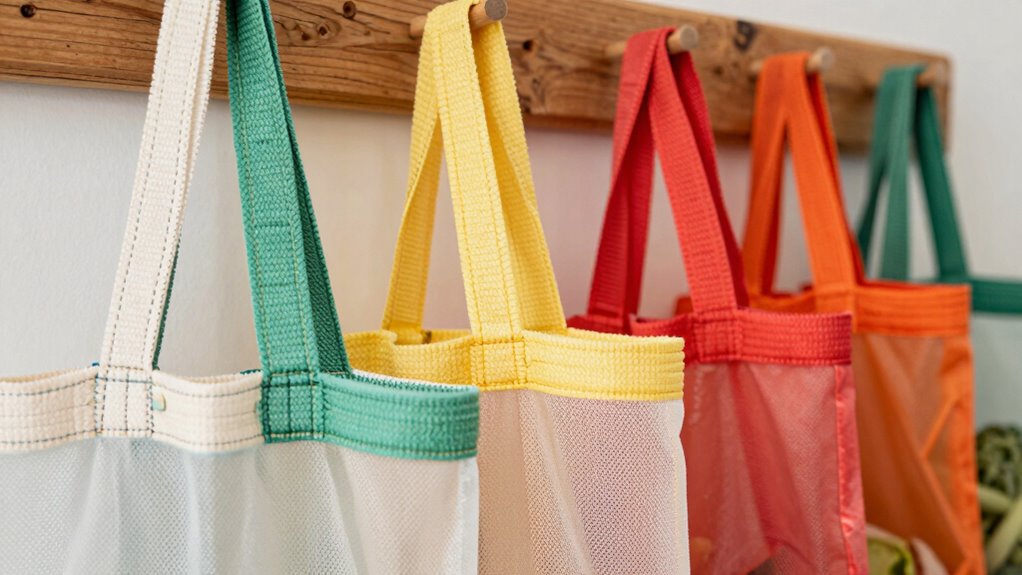
One common mistake when reinforcing produce bags is using insufficient stitching or weak seam finishes, which can lead to tears under pressure. To avoid this, choose the right fabric; sturdy, tightly woven materials like ripstop nylon or heavy-duty mesh work best. Poor fabric selection weakens the reinforcement and increases tear risk. Additionally, improper seam techniques can cause seams to unravel or split. For strong seams, use reinforced stitching methods like double stitches or zigzag stitches that distribute stress evenly. Skipping proper seam finishes or rushing through sewing results in weak points. Always ensure your stitches are secure, consistent, and appropriately tensioned. Using proper seam techniques and high-quality fabrics is essential for durability. Moreover, selecting fabrics with excellent tear resistance can significantly improve the bag’s longevity. Incorporating robust seam reinforcement methods will further help to minimize the chances of tearing. Implementing appropriate fabric selection and applying robust seam techniques will markedly reduce the chances of your produce bags ripping during use.
Tips to Maintain and Extend Your Produce Bags’ Lifespan
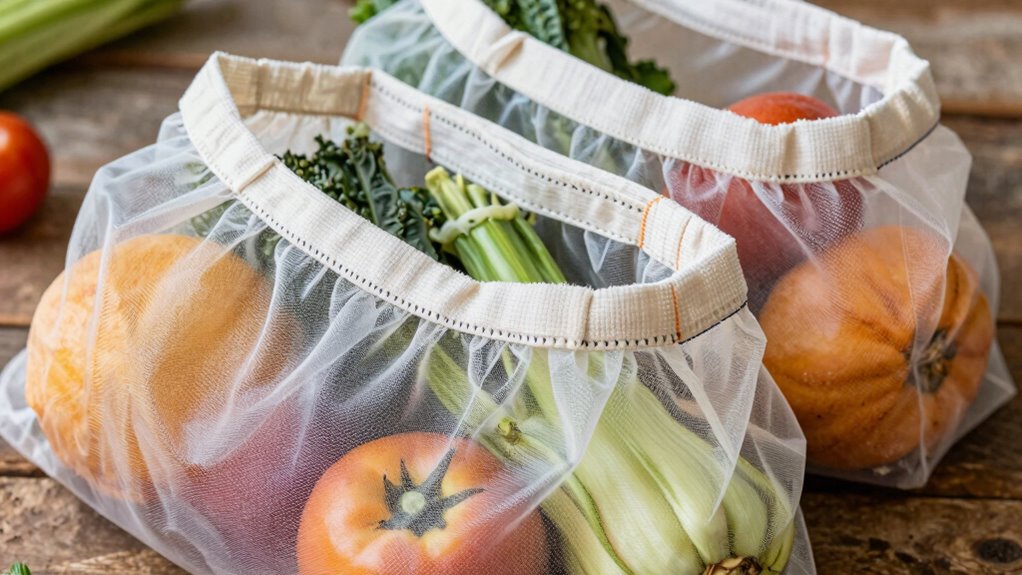
Regularly caring for your produce bags can considerably extend their lifespan. To do this, follow simple care tips and smart storage solutions. First, always wash your bags gently after each use, avoiding harsh detergents that can weaken seams. Second, dry them thoroughly to prevent mold and mildew, either air drying or using low heat in the dryer. Third, store your bags in a cool, dry place, such as a dedicated drawer or bin, to prevent unnecessary wear and tear. Proper storage solutions prevent creasing or ripping when not in use. Additionally, choosing high-quality materials can significantly enhance the durability of your produce bags. Using reinforced seams and sturdy fabrics ensures your bags can handle frequent use without ripping. Incorporating proper care techniques can also help maintain the integrity of the seams over time. Paying attention to piercing care and hygiene is crucial for bags that feature any metal components, as proper cleaning prevents corrosion and damage. Moreover, understanding material durability can guide you in selecting the best bags for long-term use. By maintaining your produce bags with these care tips, you ensure they stay strong and functional longer, making your eco-friendly choice a lasting one.
Frequently Asked Questions
Can Reinforced Produce Bags Be Machine Washed Without Damage?
Yes, reinforced produce bags can be machine washed without damage if you follow proper care. Their machine wash durability depends on the fabric reinforcement techniques used during manufacturing. To maintain their strength, wash them on a gentle cycle with cold water, avoid harsh detergents, and skip the dryer—air drying helps preserve the reinforced seams. This way, your bags stay durable and rip-free through multiple washes.
What Are the Best Storage Practices to Prolong Bag Life?
To prolong your reusable produce bags’ life, follow simple storage tips. Keep them in a dry, cool place away from direct sunlight to prevent wear and tear. Fold them neatly to avoid unnecessary stress on seams, and periodically perform durability testing by inspecting seams for weak spots. Avoid overloading or forcing bags open, which helps maintain their strength. Proper storage and gentle handling make certain your bags stay strong and rip-free for many uses.
Are There Eco-Friendly Fabrics Suitable for Reinforced Produce Bags?
Think of eco-friendly fabrics as the backbone of sustainable shopping. You can choose biodegradable textiles like organic cotton, hemp, or linen, which break down naturally and reduce waste. Sustainable fibers such as jute or bamboo also make excellent reinforced produce bags, offering durability without harming the environment. By selecting these materials, you guarantee your bags are strong, eco-conscious, and aligned with your commitment to planet-friendly living.
How Do I Repair a Tear in a Reinforced Produce Bag?
If you notice a tear in your reinforced produce bag, start by cleaning the area around the tear. Use a needle and strong thread to carefully perform a bag repair, ensuring you reinforce the tear fixing process with tight, even stitches along the seam. For extra durability, consider applying a fabric adhesive or patch. This approach keeps your bag functional and extends its lifespan.
What Are the Cost Benefits of Using Reinforced Bags Long-Term?
Imagine the sturdy fabric of your reinforced produce bag, resisting tears with every trip to the market. By investing in these durable bags, you enjoy significant cost savings over time, as you replace fewer bags and cut down on disposable options. Their long-term durability means you save money, reduce waste, and enjoy eco-friendly shopping. Over months and years, your initial investment pays off through consistent reuse and resilience.
Conclusion
With the strong-seam method, your produce bags become as tough as a knight’s armor, ready to face countless trips to the market. By choosing durable fabrics, sewing carefully, and avoiding common mistakes, you’ll keep your bags rip-resistant and eco-friendly for years. Just like a trusty sword in a medieval tale, these reinforced bags will stand the test of time, helping you save the planet—one grocery run at a time. Your sustainable journey just got a whole lot stronger!