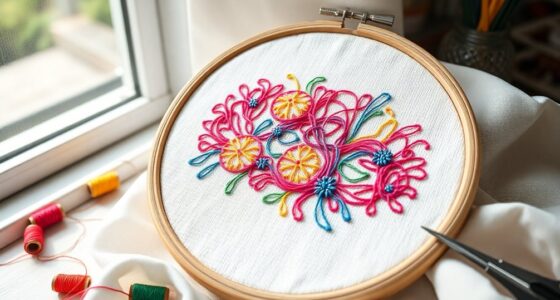
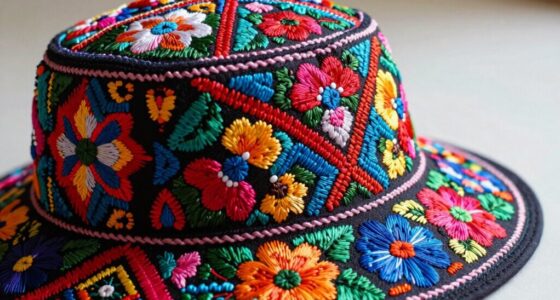
Embroidery has a rich history that dates back thousands of years, starting as simple stitches used for practical and decorative purposes in ancient cultures. Over time, it evolved into an art form reflecting cultural values, social status, and storytelling, influenced by technological advances and regional styles. From Chinese silk embroidery to African beadwork and European goldwork, embroidery continues to adapt, blending tradition with modern innovations. Exploring this journey reveals how embroidery remains a vibrant expression of culture and creativity today.
Key Takeaways
- Embroidery originated as a practical craft in ancient times, evolving into an art form through cultural development and regional styles.
- It reflects cultural values, social status, and storytelling, with unique styles across African, Chinese, and European civilizations.
- Technological innovations like tools, dyes, and materials expanded embroidery techniques, complexity, and durability over centuries.
- Cross-cultural exchanges through trade and conquest enriched embroidery styles, motifs, and symbolism globally.
- Modern embroidery combines traditional methods with technological advances, maintaining cultural significance while embracing innovation.

Have you ever wondered how embroidery evolved from a simple craft to an intricate art form? The journey of embroidery is a fascinating story of techniques evolution and cultural significance. In ancient times, early humans used basic stitches to decorate clothing and textiles, often for practical purposes like strengthening fabric. Over centuries, these techniques became more refined as different cultures developed unique styles and stitches, turning embroidery into a form of artistic expression. As you trace its history, you’ll see how each civilization added its own touch—whether it was the intricate beadwork of African tribes or the delicate silk embroidery of Chinese dynasties. This evolution of techniques reflects not only technological advances but also the cultural values and social statuses attached to embroidered items. For example, in medieval Europe, embroidery was reserved for the wealthy, symbolizing power and prestige through elaborate goldwork and detailed motifs. Meanwhile, in other regions, embroidery served as a storytelling medium, passing down myths, legends, and cultural beliefs from generation to generation. The techniques evolved with the availability of materials and tools, pushing artisans to innovate and develop new stitches, patterns, and methods. You might find that the introduction of embroidery hoops, needles, and dyes expanded creative possibilities, making intricate designs more accessible and durable. Additionally, the development of specialized tools and materials further advanced embroidery techniques, allowing for more complex and durable designs. As embroidery traveled across continents through trade and conquest, it absorbed influences from different cultures, further enriching its techniques and symbolism. This blending of styles highlights its cultural significance as a universal language, capable of conveying identity, tradition, and social hierarchy. Whether it’s the geometric patterns of Central Asian textiles or the floral motifs of Persian embroidery, each piece tells a story rooted in its cultural context. Today, embroidery continues to evolve, blending traditional techniques with modern technology like computerized embroidery machines, digital design software, and sustainable materials. Despite these advancements, the core cultural significance remains—embroidery is still a way to honor heritage, celebrate creativity, and express personal or collective identities. You can see this in contemporary embroidery trends, which often draw inspiration from historical motifs while pushing artistic boundaries. Recognizing the techniques evolution and cultural significance behind embroidery helps you appreciate it not just as decoration, but as a living tradition that connects past and present. It’s a craft that has grown in complexity and importance, reflecting the diverse stories and values of cultures around the world. So, every stitch you admire carries centuries of history, innovation, and cultural meaning, making embroidery a truly timeless art form.

Caydo 6 Pieces Embroidery Hoops with 16 Pieces Needles, 3 Inch to 10 Inch
- Variety of Embroidery Hoop Sizes: Six sizes from 3.6 to 10.7 inches
- Includes 16 Needles: Three different needle sizes included
- Durable Plastic Material: Made of lightweight, resistant PP plastic
As an affiliate, we earn on qualifying purchases.
As an affiliate, we earn on qualifying purchases.
Frequently Asked Questions
How Did Embroidery Influence Ancient Trade Routes?
Embroidery influenced ancient trade routes by serving as a valuable commodity and a symbol of cultural exchange. When you travel along trade routes, you’ll notice that embroidered textiles linked different regions, spreading styles, techniques, and motifs. These intricate fabrics facilitated cultural interactions, fostering connections between civilizations. As a result, embroidery not only boosted trade but also helped share artistic traditions, enriching cultures across continents and shaping the development of global trade networks.
What Are the Rarest Embroidery Stitches in History?
You’ll find that rare stitches like the French Knots, Bullion, and Cretan stitches are among the most elusive in historical techniques. These intricate, time-consuming stitches were often used in ancient embroidery to create texture and detailed designs. Their rarity today is due to their complexity and the skill required, making them prized by collectors and artisans who seek to preserve these unique, historical techniques that connect us to embroidery’s rich past.
How Has Embroidery Impacted Fashion Industry Sustainability?
Embroidery weaves sustainability into fashion’s fabric, acting like a gentle breeze stirring eco-friendly materials into stunning designs. You see, it promotes sustainable practices by encouraging the use of natural, biodegradable threads and fabrics, reducing waste. This artistry inspires brands to craft timeless pieces that honor the planet. As a result, embroidery’s delicate stitches become powerful symbols of fashion’s shift toward eco-consciousness, making your wardrobe a tapestry of beauty and responsibility.
What Cultural Symbols Are Most Commonly Incorporated Into Embroidery?
You’ll notice that cultural symbolism and traditional motifs are most commonly incorporated into embroidery. You might see floral patterns representing growth, animals symbolizing strength, or geometric designs reflecting spiritual beliefs. These motifs vary across cultures—like dragons in Chinese embroidery or paisley patterns in Indian textiles. Incorporating these symbols connects you to a community’s history and values, making each embroidered piece a meaningful expression of cultural identity.
How Is Digital Technology Transforming Embroidery Techniques Today?
Digital technology is revolutionizing embroidery, turning it into a canvas for innovation. With digital embroidery, you can create intricate designs quickly and precisely, while augmented reality brings your work to life, allowing viewers to interact with embroidered pieces in new ways. This fusion of tech and craft makes embroidery more accessible and dynamic, transforming traditional stitches into a modern art form that engages and inspires in ways never before possible.
Conclusion
As you explore embroidery’s rich history, you’ll see how this art form has evolved from ancient rituals to contemporary fashion. Imagine a modern designer reviving traditional motifs, blending old techniques with new trends—like a small boutique transforming a centuries-old pattern into a trendy jacket. Embroidery isn’t just about decoration; it’s a story woven into fabric, connecting you to centuries of culture and creativity. So, next time you see embroidered art, remember—you’re part of this enduring tradition.