To sew tricky fabrics like silk, leather, and denim, start by choosing the right stabilizers and needles—use microtex needles for silk and nylon-based stabilizers for slippery fabrics. Adjust your machine settings by lowering the speed, shortening stitch length, and using a Teflon foot for leather. For heavy denim, select reinforced needles and increase stitch length. If you keep these tips in mind, you’ll master sewing these fabrics with professional results. Keep going to discover more expert techniques.
Key Takeaways
- Use appropriate stabilizers, tissue paper, or stabilizing sprays to hold slippery fabrics like silk and chiffon securely.
- Select fine, sharp microtex or ballpoint needles (size 60/8 or 70/10) for delicate fabrics to prevent snags and runs.
- Sew at reduced speeds with shorter stitch lengths, testing on scraps to avoid puckering and ensure precise seams.
- For heavy or textured fabrics like denim and leather, use reinforced needles, heavier stitches, and appropriate presser feet.
- Proper preparation, stabilization, and correct needle choice are essential for professional, clean results on tricky fabrics.
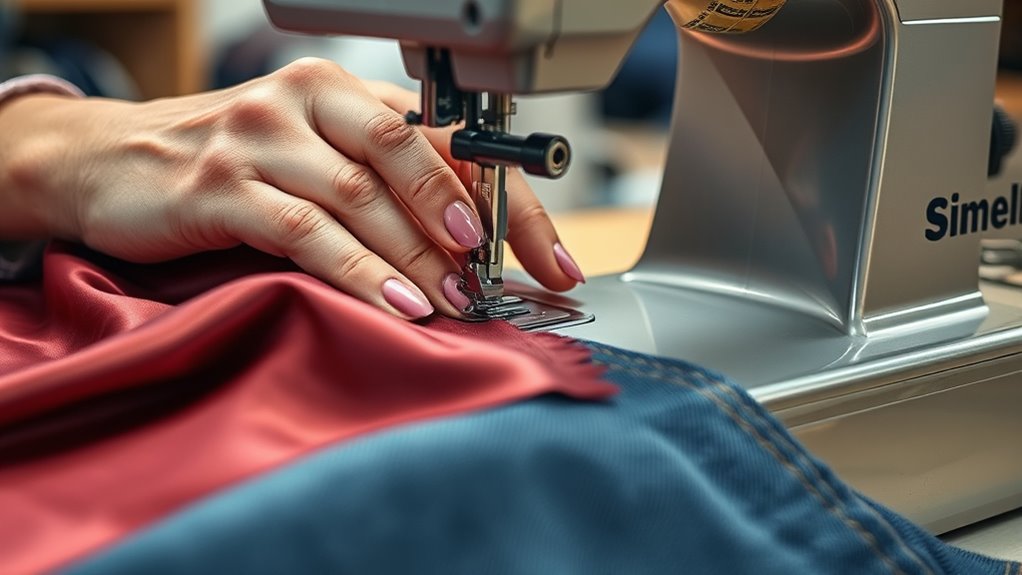
Have you ever struggled to sew delicate or slippery fabrics without frustration? If so, you’re not alone. These tricky materials require special techniques to ensure your seams stay neat and your fabric doesn’t slip or bunch. One of the most effective ways to manage delicate or slippery fabrics is by focusing on fabric stabilization. This involves using stabilizers, tissue paper, or water-soluble stabilizers to hold the fabric in place as you sew. For silk or chiffon, placing a layer of tissue paper underneath the fabric can help keep it stable and prevent slipping. When working with slippery fabrics, you can also consider using spray stabilizers or stabilizing sprays that add just enough grip without altering the fabric’s feel. These tools give you more control, especially when sewing curved or intricate seams.
Another critical aspect to contemplate is needle selection. The right needle makes all the difference, especially with delicate or tricky fabrics. For lightweight silks and chiffons, choose a fine, sharp needle like a size 60/8 or 70/10 microtex needle. These needles penetrate thin fabrics smoothly, reducing the risk of snags or runs. When sewing slippery fabrics, a ballpoint or sharp needle helps pierce through the fibers cleanly, minimizing skipped stitches. If you’re working with heavier or more textured fabrics like denim or leather, switch to a heavier needle, such as a denim or leather needle, which is designed to handle thick, tough fibers without damaging the material. The correct needle not only prevents fabric damage but also ensures your stitches are even and secure.
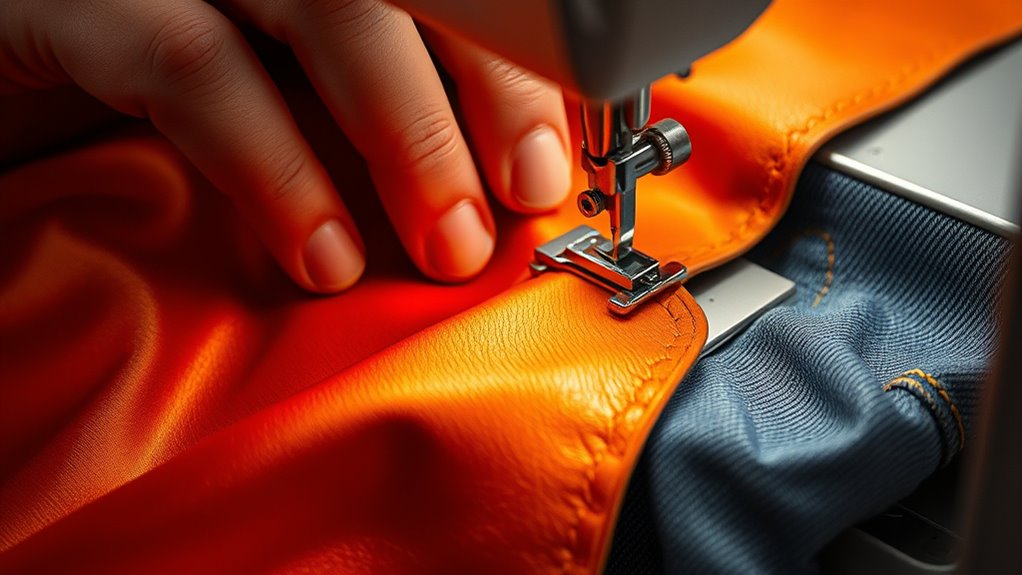
In addition to stabilization and needle choice, consider adjusting your sewing machine settings. A slower sewing speed gives you better control, especially on delicate fabrics. Use a shorter stitch length for more precise seams, and test on scraps first to avoid puckering or fraying. For silk, avoid pulling or stretching the fabric as you sew; instead, guide it gently through the machine. For leather, use a Teflon or roller foot to prevent sticking and slipping. Denim benefits from a slightly longer stitch to handle the thicker layers, and using a reinforced or heavy-duty needle helps prevent skipped stitches when sewing through multiple layers.
Ultimately, sewing tricky fabrics is about preparation and precision. Proper fabric stabilization and needle selection are your best allies in creating professional-looking projects. By taking these steps, you’ll find sewing delicate, slippery, or heavy fabrics becomes much easier, leading to beautifully finished garments or craft pieces every time.

SCHMETZ Microtex Sharp Sewing Machine Needles – Quilting & Topstitching Supplies, Size 60/8, 5-Needle Card, Pack of 1
STRONG & SHARP PRECISION NEEDLE: The SCHMETZ Microtex sewing machine needle features an ultra-thin, sharp point for flawless…
As an affiliate, we earn on qualifying purchases.
As an affiliate, we earn on qualifying purchases.
Frequently Asked Questions
How Do I Prevent Silk From Slipping While Sewing?
To prevent silk from slipping while sewing, you should use fabric stabilizers like tissue paper or spray stabilizer underneath the fabric. Also, adjust your sewing machine settings—use a short, fine stitch and a sharp needle designed for delicate fabrics. Keep the silk flat and steady, and sew slowly. These steps help control the fabric and make sure smooth, precise stitches without puckering or slipping.
What Are the Best Needles for Sewing Leather?
Think of leather as your canvas; choosing the right needle is like selecting a brush for a masterpiece. For leather preparation, guarantee your fabric is clean and smooth. Use a heavy-duty, curved or wedge needle designed for leather, as these glide through tough material without damage. These needles pierce the surface efficiently, making sewing smoother. Trust the right needle to turn your leather project into a flawless work of art.
How Can I Avoid Fabric Puckering With Denim?
To avoid fabric puckering with denim, make certain your fabric tension is properly adjusted; too tight tension causes puckering. Use a slightly larger seam allowance to give your stitches room to settle smoothly. Also, pin or clip the fabric carefully before sewing, and sew slowly, especially around curves. These steps help keep your seams even and prevent puckering, resulting in a clean, professional finish every time.
Are Special Threads Needed for Sewing Tricky Fabrics?
Yes, special threads can help when sewing tricky fabrics. You should also adjust your sewing machine settings and thread tension accordingly to prevent puckering or breakage. For delicate fabrics like silk, use fine, high-quality threads, and for leather or denim, choose heavy-duty or upholstery threads. Properly matching your thread to the fabric guarantees smoother sewing, reduces snagging, and gives your project a professional finish.
How Do I Finish Raw Edges on Delicate Fabrics?
To finish raw edges on delicate fabrics, you should use gentle edge finishes like French seams or narrow zigzag stitches to prevent fraying and maintain fabric integrity. Keep your seam allowances small to reduce bulk, and consider using seam binding or bias tape for extra protection. These methods guarantee a clean, professional look while safeguarding the delicate fabric from wear and tear over time.
leather sewing machine presser foot
As an affiliate, we earn on qualifying purchases.
As an affiliate, we earn on qualifying purchases.
Conclusion
Now that you know how to handle silk, leather, and denim, you’re ready to take on any fabric challenge. With patience and the right techniques, you can turn tricky materials into stunning creations. Remember, sewing is like a journey—sometimes you hit rough patches, but perseverance pays off. Keep practicing, stay confident, and you’ll find that what once seemed impossible becomes second nature. After all, where there’s a will, there’s a way!

SCHMETZ Jean & Denim Sewing Machine Needles – Precision Needles for Heavy Fabric, Assorted Sizes, 5-Needle Cards, Pack of 1
MASTER EVERY STITCH: Compatible with all home sewing machines, SCHMETZ Jean & Denim Needles handle thick fabric like…
As an affiliate, we earn on qualifying purchases.
As an affiliate, we earn on qualifying purchases.

SULLIVANS USA, INC. FABRIC STABILIZER SP 9OZ
Package weight : 12.0 pounds
As an affiliate, we earn on qualifying purchases.
As an affiliate, we earn on qualifying purchases.