To build a pressing station that saves time, choose sturdy, industrial-grade equipment with adjustable features and safety elements like heat shields. Organize your workspace by placing tools, fabrics, and supplies within arm’s reach in a clutter-free area with proper lighting. Guarantee good ventilation, regular maintenance, and safety protocols are in place to keep everything running smoothly. By implementing these tips, you’ll create an efficient setup that boosts productivity—continue exploring to learn more about optimizing your station.

Get business pricing on tools and workshop supplies
- Business-only prices and quantity discounts
- Tax-exempt purchasing
- Multiple users, one account, clear invoices
Key Takeaways
- Choose industrial-grade, adjustable-height pressing tables with heat-resistant surfaces for efficiency and durability.
- Arrange tools and supplies within arm’s reach to minimize movement and streamline workflow.
- Optimize workspace layout for seamless transition between cutting, sewing, and pressing tasks.
- Incorporate safety features like automatic shut-offs and proper ventilation to prevent delays caused by hazards.
- Implement regular maintenance and organization routines to ensure equipment functions smoothly and reduces downtime.
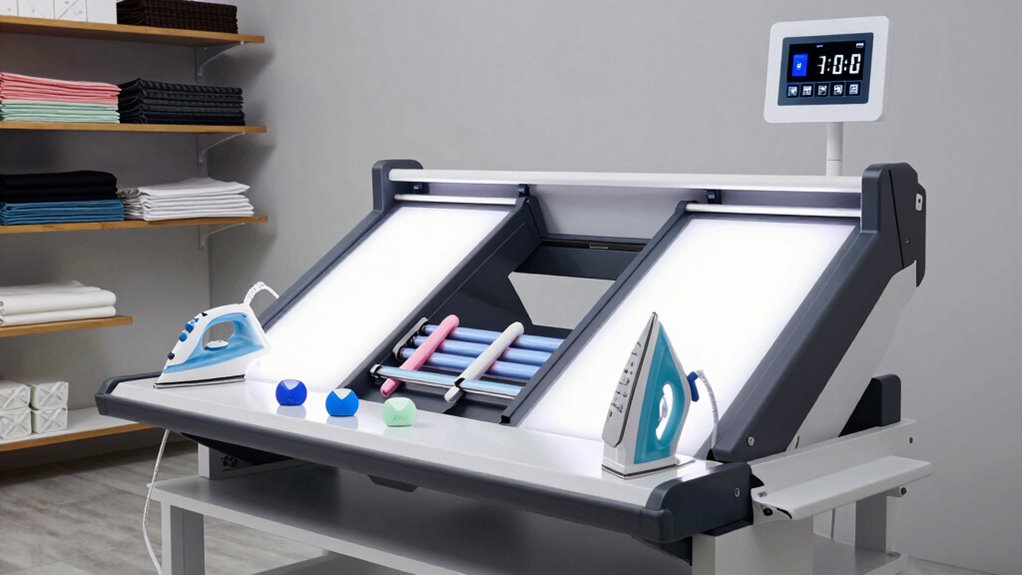
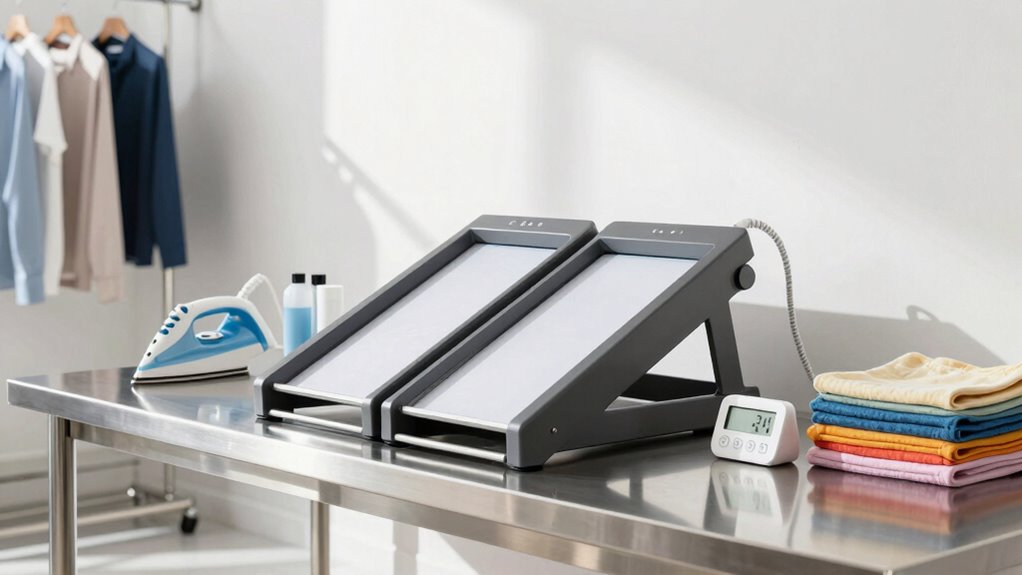
Building a pressing station can streamline your fabric work and improve efficiency, but it requires careful planning and the right tools. The foundation of an effective station is selecting the appropriate industrial equipment that fits your specific needs. You want a sturdy, reliable pressing table or station that can withstand daily use without wobbling or shifting. Look for industrial-grade surfaces with heat-resistant materials, and consider features like adjustable height or built-in steam systems to enhance comfort and performance. Proper equipment guarantees consistent results and minimizes the effort you put into pressing, saving you time in the long run. Ensuring your workspace includes proper ventilation is also crucial, especially when working with steam or heat-intensive industrial equipment, to maintain a safe environment. Safety protocols are critical when setting up your pressing station. Before you even turn on the equipment, guarantee your workspace is clear of hazards and that all electrical connections are secure and up to code. Use grounded outlets and avoid overloading circuits to prevent electrical fires or malfunctions. It’s essential to install safety features such as automatic shut-offs or heat shields to protect yourself from burns or hot surfaces. Keep a fire extinguisher nearby, and make sure your workspace is well-ventilated, especially if you’re working with steam or heat-intensive industrial equipment. Wearing protective gear like heat-resistant gloves and aprons can prevent accidents and injuries during operation. Additionally, industrial-grade surfaces can help prevent damage to your fabrics and tools, ultimately prolonging the lifespan of your equipment. You may also want to consider ergonomic design features that reduce physical strain during long pressing sessions. Positioning your pressing station thoughtfully also plays a significant role in efficiency. Place it in a dedicated, clutter-free area where you can move seamlessly between cutting, sewing, and pressing tasks. Keep all necessary tools and supplies within arm’s reach — spare fabrics, pressing cloths, spray bottles, and seam rolls — so you don’t waste time searching for them mid-project. Organize cords and hoses to avoid tripping hazards, and ensure there’s adequate lighting to see details clearly. When your station is well-organized and safe, you reduce the risk of mistakes and accidents, ultimately saving you time and effort. Finally, establish a routine for maintenance and safety checks. Regularly inspect your industrial equipment for wear and tear, and clean surfaces after each use to maintain top performance. Periodic safety audits ensure all safety protocols are followed, and equipment remains in good condition. By integrating these practices into your workflow, you make your pressing station not just a time-saver but a safer, more reliable workspace. When you combine quality industrial equipment with strict safety protocols and thoughtful organization, you transform your fabric work into a more efficient, enjoyable process that saves you real time.
industrial pressing station with adjustable height
As an affiliate, we earn on qualifying purchases.
As an affiliate, we earn on qualifying purchases.
Frequently Asked Questions
What Safety Precautions Are Necessary When Building a Pressing Station?
You need to wear safety equipment like heat-resistant gloves, eye protection, and an apron when building your pressing station. Make sure to follow emergency procedures, such as having a fire extinguisher nearby and knowing how to shut off power quickly. Keep the workspace clean and well-ventilated to prevent accidents. Regularly check equipment for damage, and never leave the pressing area unattended while in use.
How Much Does It Typically Cost to Set up a Pressing Station?
You’ll typically spend between $200 and $1,500 on a pressing station, depending on your needs and equipment quality. Conduct a clear cost analysis and prioritize budget planning to avoid overspending. Basic setups with essential tools may cost less, while professional stations with advanced features can push the price higher. By balancing cost and functionality, you’ll create a pressing station that’s both efficient and affordable for your workspace.
Can a Pressing Station Be Customized for Different Fabric Types?
Yes, you can definitely customize a pressing station for different fabric types. You should look for one with fabric compatibility options and adjustable settings. This allows you to modify heat levels and pressure according to the material you’re working with, ensuring ideal results without damaging delicate fabrics or poorly pressing thicker textiles. Customizable features make your pressing station versatile, saving you time and effort across various projects.
What Tools Are Essential for Maintaining a Pressing Station?
You need essential tools like a spray bottle for steam, a cleaning cloth, and a mild detergent for maintaining your pressing station. Keep your pressing station layout organized, guaranteeing tools are within reach. Regular essential maintenance includes cleaning the iron’s soleplate, inspecting the cord for damage, and checking the station’s surfaces for dirt or residue. These steps help your station stay efficient, prolong equipment life, and ensure high-quality results.
How Do I Troubleshoot Common Issues With Pressing Stations?
To troubleshoot pressing issues, start with pressing station maintenance by checking for worn-out parts or buildup that could affect heat and pressure. Confirm the thermostat is accurate and the steam supply is consistent. If problems persist, inspect electrical connections and wiring for faults. Regular troubleshooting pressing issues helps maintain ideal functioning, prevents downtime, and extends your pressing station’s lifespan. Always follow safety guidelines during maintenance and repairs.
Conclusion
Building your own pressing station is a game-changer, saving you precious time and boosting your efficiency. When you put in the effort to create a tailored setup, you’re investing in your craft and future success. Remember, Rome wasn’t built in a day, so stay patient and persistent. With your new station, you’ll be able to work smarter, not harder — and that’s the secret to staying ahead of the game.
Fall Picks
fall essentials
As an affiliate, we earn on qualifying purchases.