
To adjust shoulder width without ruining the sleeve fit, start by carefully taking in or letting out the shoulder seams evenly. Be sure to reshape the armhole to keep the sleeve sitting smoothly and avoid pulling or sagging. Reinforcing delicate fabrics can help prevent puckering during alterations. If you want to learn more about balancing shoulder adjustments with sleeve shaping, keep exploring the details that make these modifications successful.

Get business pricing on tools and workshop supplies
- Business-only prices and quantity discounts
- Tax-exempt purchasing
- Multiple users, one account, clear invoices
Key Takeaways
- Carefully reshape the armhole curve to maintain proper sleeve fit during shoulder width adjustments.
- When taking in shoulders, sew evenly from the shoulder seam to avoid distortion of the sleeve cap.
- Test alterations on scrap fabric to ensure sleeve and armhole fit remain balanced.
- Reinforce seams to prevent puckering, especially with delicate or stretchy fabrics.
- Adjust shoulder width gradually, checking sleeve movement and fit at each step.
Have you ever felt self-conscious about your shoulder width? It’s a common concern, but luckily, there are ways to adjust it without compromising the overall fit of your clothing. When tackling this task, understanding a bit of fashion history can be surprisingly helpful. Historically, different eras favored various shoulder styles—think the padded, broad shoulders of the 80s or the slim, streamlined look of the 1920s. Recognizing these trends helps you decide whether to emphasize or downplay shoulder width, depending on your personal style. But beyond fashion history, one of the most vital factors is fabric selection. The type of fabric you use determines how easily you can alter your garment and how natural the changes will look. For example, stretch fabrics like spandex blends respond well to minor adjustments, whereas woven fabrics such as wool or linen require more careful handling.
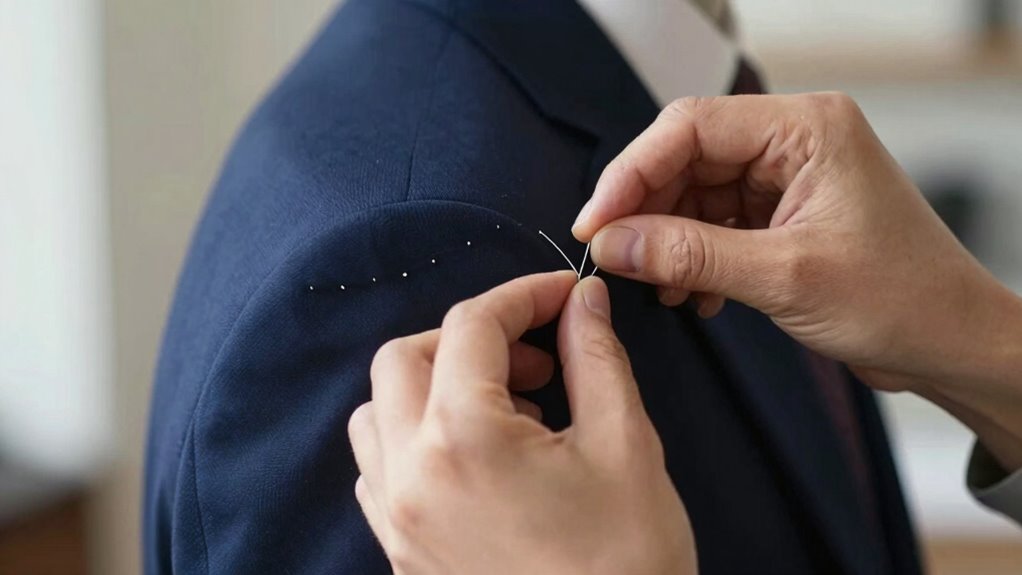
When you want to narrow your shoulders, start by choosing a fabric that allows for subtle modifications. If you’re working with a tailored jacket or a shirt, focus on seam alterations. Carefully take in the shoulder seams, making sure to distribute the extra fabric evenly. This prevents the sleeve from becoming too tight or misshapen. If the fabric is delicate or prone to puckering, consider reinforcing the seams with a small amount of interfacing. Conversely, if you’re trying to broaden your shoulders, adding fabric or padding can be effective, but do so thoughtfully. Use lightweight padding or shoulder pads that mimic natural shoulder curves, and attach them with a strategic stitch that won’t disrupt the sleeve fit. Additionally, understanding the fabric properties can help you select the best approach for your alteration.
You also have to be mindful of sleeve fit when adjusting shoulder width. The sleeve cap must sit smoothly on the shoulder without pulling or sagging. To achieve this, you might need to reshape the sleeve’s armhole. Carefully alter the armhole curve, ensuring the sleeve maintains its original shape and fits snugly. When working with fabric, always test your adjustments on scrap material first. This step helps you gauge how the fabric responds to sewing or padding, letting you avoid irreversible mistakes. Moreover, taking the time to learn about sewing techniques tailored for different fabrics can significantly improve your results. Remember, patience and precision are key. With a good understanding of fabric properties and a bit of historical context, you can modify your wardrobe confidently—adjusting shoulder width to suit your style without sacrificing the perfect sleeve fit.
Popular right now

Breville Bambino Espresso Machine, Brushed Stainless Steel

KitchenAid Classic Series 4.5-Quart Tilt-Head Stand Mixer, Onyx Black

Philips 4400 Series Fully Automatic Espresso Machine with LatteGo Milk System
As an affiliate, we earn on qualifying purchases.
Frequently Asked Questions
Can Shoulder Adjustments Be Done on All Fabric Types?
You can generally adjust shoulder width on most fabrics, but fabric flexibility plays a big role. Stretchy or knit fabrics are easier to modify without damaging the material, while stiff or woven fabrics may require extra seam reinforcement to prevent tearing. Always test a small area first, and consider reinforcing seams during alterations. With delicate fabrics, it’s best to consult a professional to avoid ruining the sleeve fit or fabric integrity.
How Do I Maintain Sleeve Length After Narrowing Shoulders?
To maintain sleeve length after narrowing your shoulders, you should carefully adjust the shoulder seam using precise alteration techniques. First, mark the new shoulder line, ensuring the sleeve length stays consistent. When sewing, avoid pulling or stretching the fabric. If needed, lengthen the sleeves by adding fabric at the cuff or sleeve hem. This way, you preserve the original sleeve length, achieving a perfect fit without compromising style.
Will Altering Shoulder Width Affect the Overall Garment Fit?
Yes, altering shoulder width can affect the overall garment fit, but with careful tailoring, you can maintain balance. Understanding fashion history helps you appreciate how shoulder styles evolved, influencing fit and silhouette. Celebrity styles often showcase tailored shoulder adjustments, emphasizing sharp or relaxed looks. When you adjust shoulder width, focus on preserving proportions and sleeve length, ensuring the garment remains flattering and true to your personal style.
Is It Better to Adjust Shoulders Before or After Tailoring?
It’s better to adjust shoulders before tailoring because it allows for precise shoulder pad modification and guarantees fabric stretch considerations are properly addressed. Making adjustments early helps maintain the garment’s overall balance and fit, preventing issues like puckering or sagging. If you adjust afterward, you risk disrupting the sleeve fit and altering the original design. Doing it first gives you a clean slate for fine-tuning the rest of the garment.
How Much Can Shoulder Width Be Safely Reduced?
Think of your shoulders as the backbone of your look—you can usually safely reduce shoulder width by about 1 to 1.5 inches, but don’t go overboard. Too much adjustment risks ruining shoulder symmetry and causes fabric stretching, which can distort the fit of your sleeves. Always work gradually and check the fit frequently, ensuring your shoulders stay balanced and comfortable without compromising the garment’s integrity.
Conclusion
Remember, tailoring your wardrobe isn’t about drastic changes but subtle adjustments that make a difference. With patience and a steady hand, you can refine your shoulder fit without compromising the sleeve’s integrity. As the saying goes, “A little effort goes a long way,” so take your time and trust in the process. When done right, your clothes will fit perfectly, boosting your confidence and style effortlessly.